
Oak Grove Renovation

2025

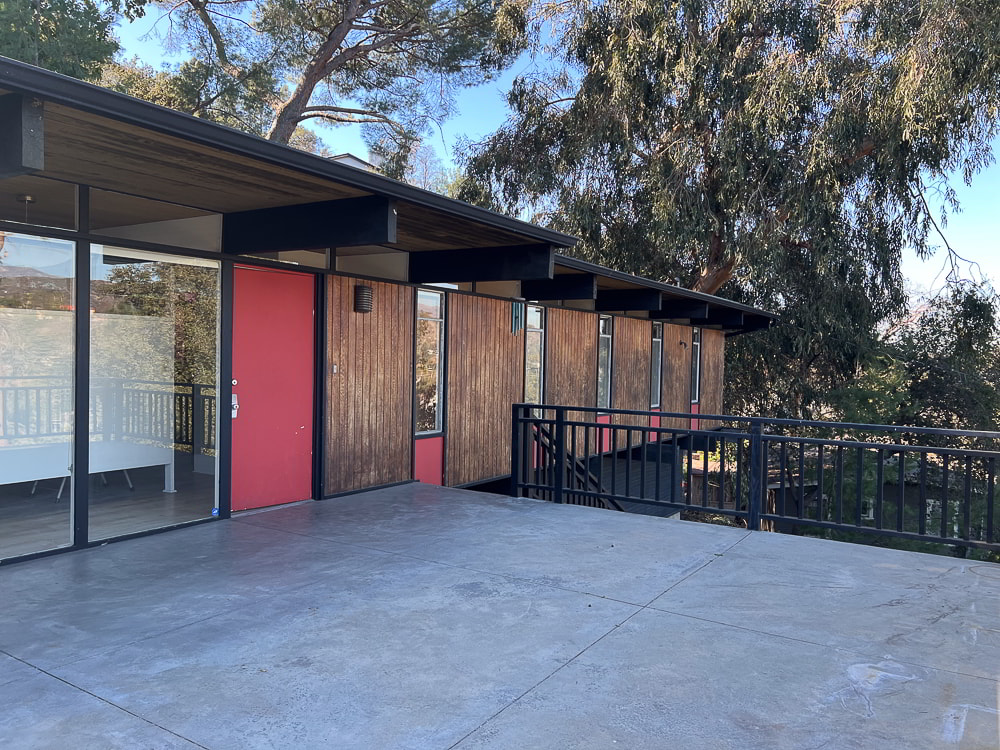
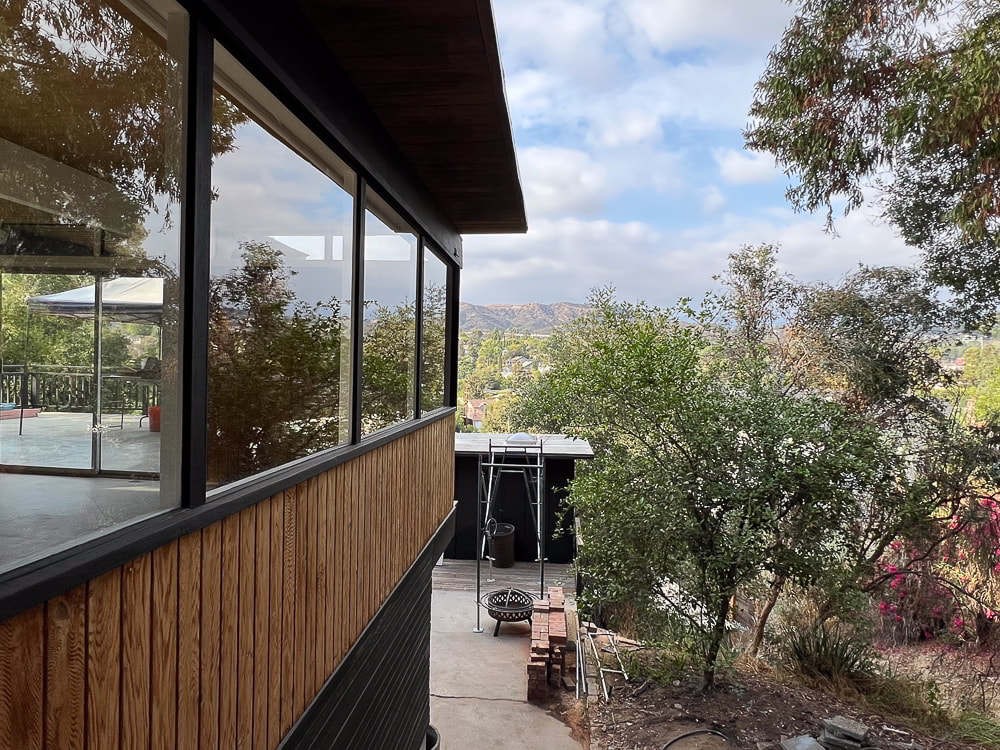
Originally designed and completed in 1961 by architect Dick Lowry, this post-and-beam residence is believed to be one of his earliest explorations in the Mid-Century Modern (MCM) style. Tucked into the north-facing hillside, the home enjoys two defining features: sweeping views of the Angeles Crest and Verdugo Mountains to the north, and dappled southern light filtered through mature trees.

In 2025, the home underwent a thoughtful renovation and restoration aimed at enhancing its original spirit while adapting it to contemporary living.

RENOVATION OVERVIEW:

The renovation focused on removing barriers to natural light and views, improving spatial flow, enhancing privacy, and upgrading kitchen functionality.

  • Skylight
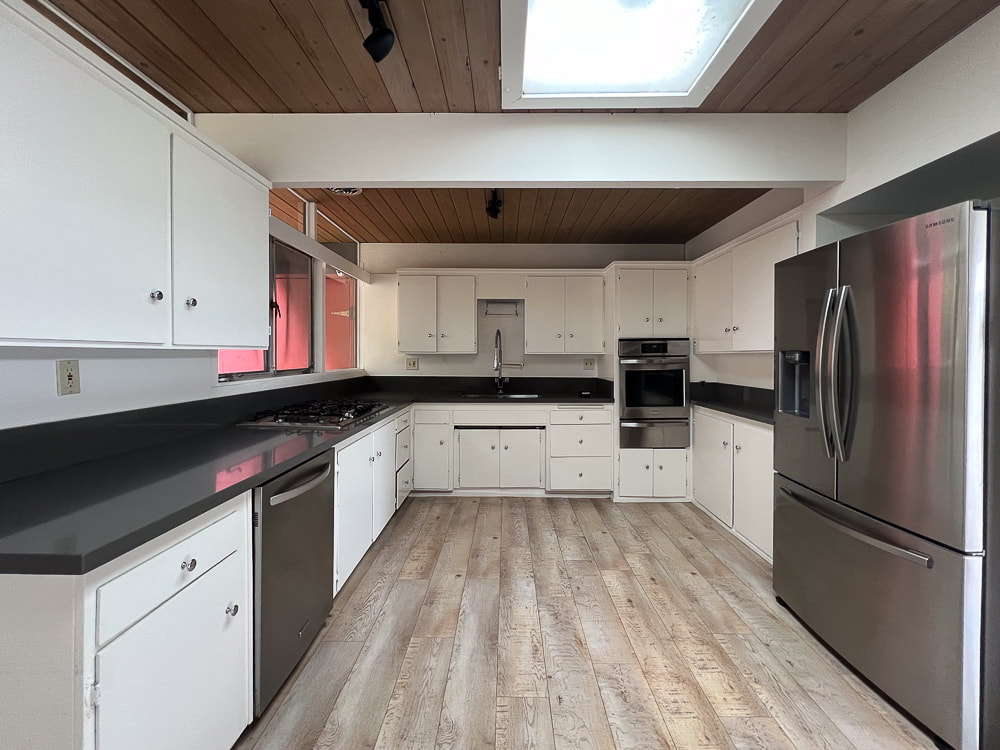
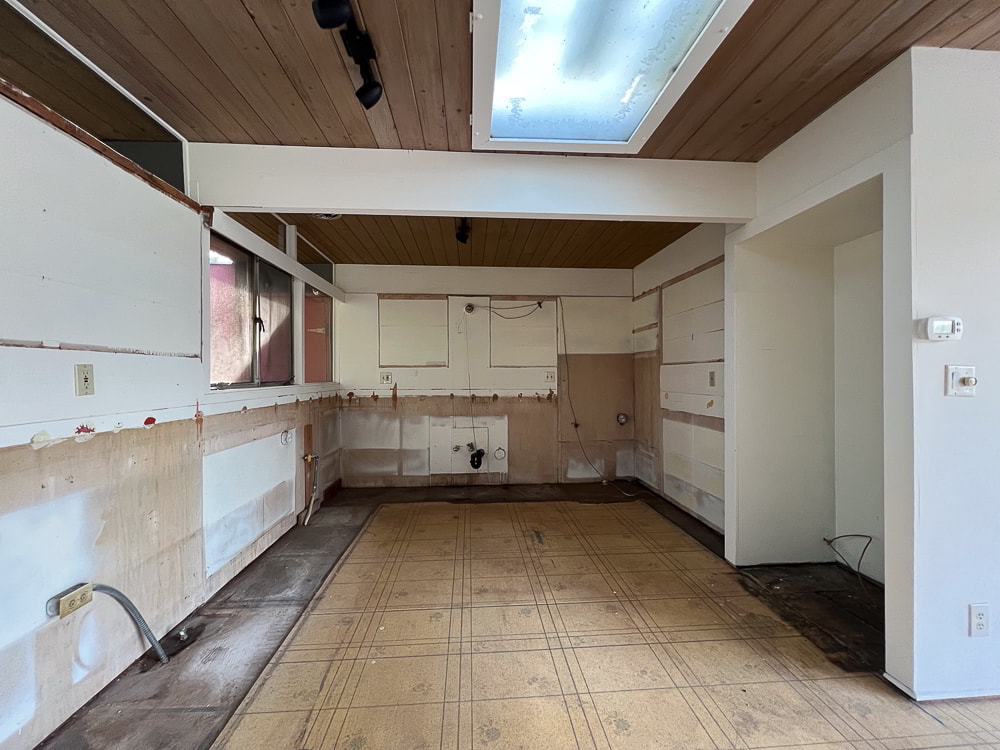
    The interior-facing fritted glass cover, along with fluorescent tubes and fixtures, was removed from the old skylight to maximize daylight and restore a direct visual connection to the sky. This intervention is especially valuable during winter months, when the hillside and deep overhangs limit sunlight penetration.
  • New Operable Windows
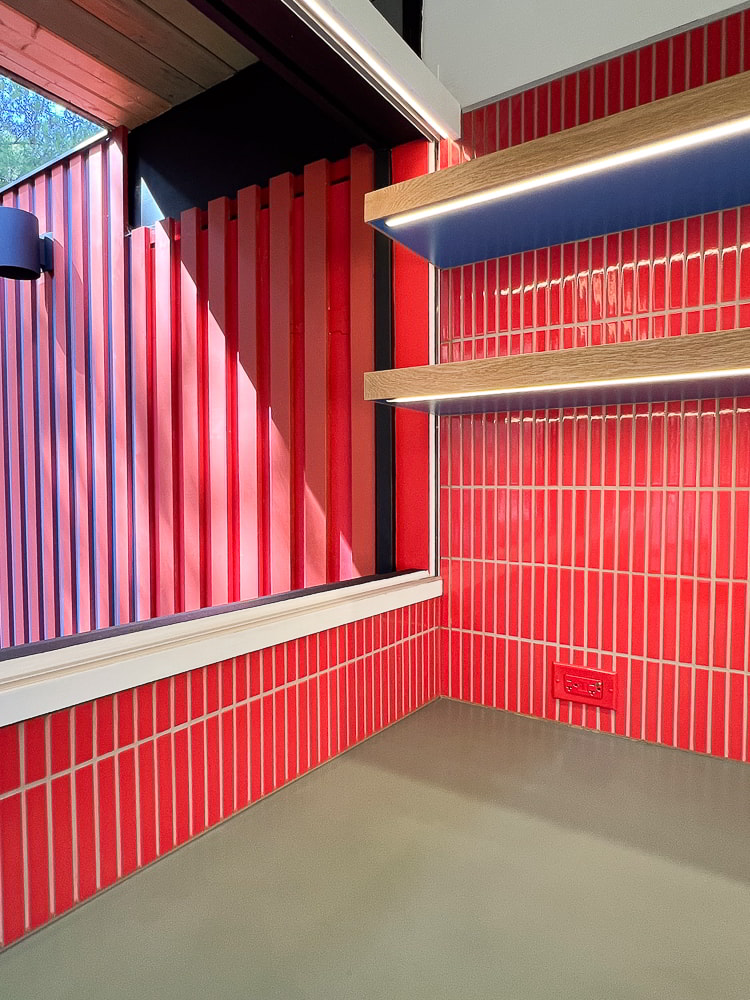
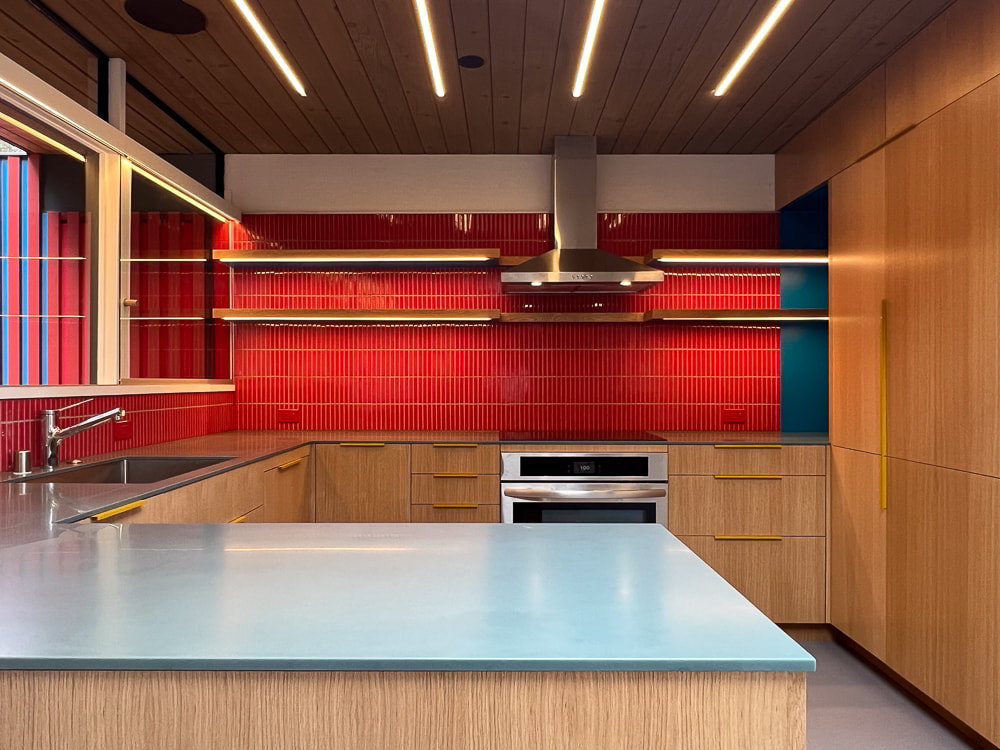
    An upper cabinet was removed and replaced with operable windows, introducing cross-ventilation and opening up views to the backyard—bringing fresh air and a renewed sense of connection to the outdoors. Another operable window is added to work in tandem with the exhaust fan to quickly remove heat and cooking smoke.
  • Animated Screen
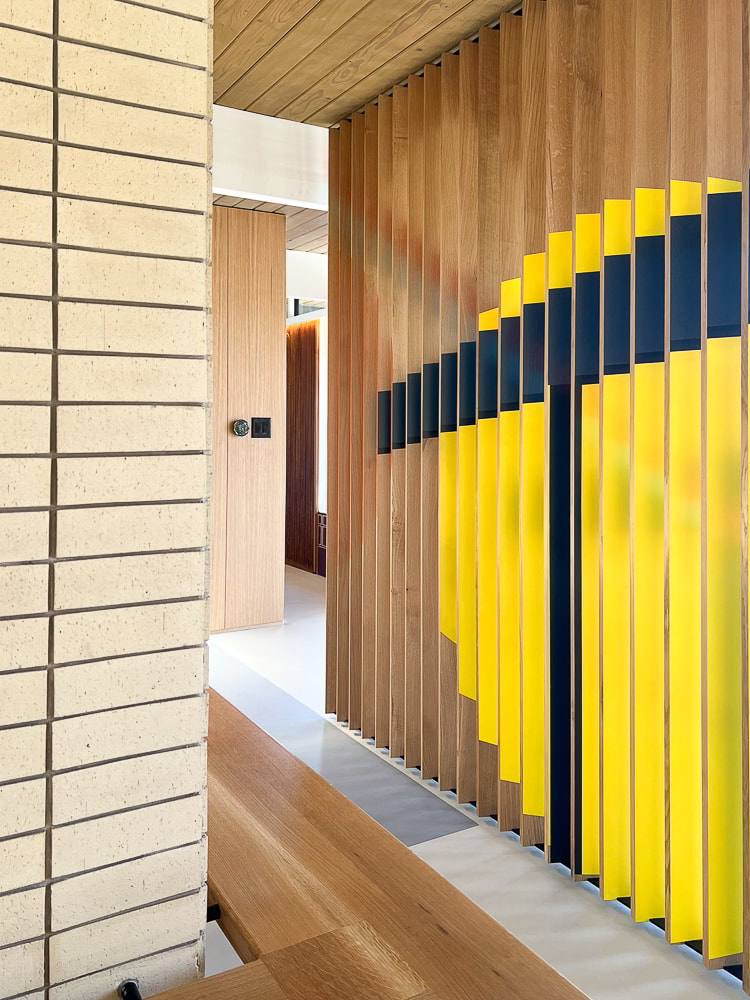
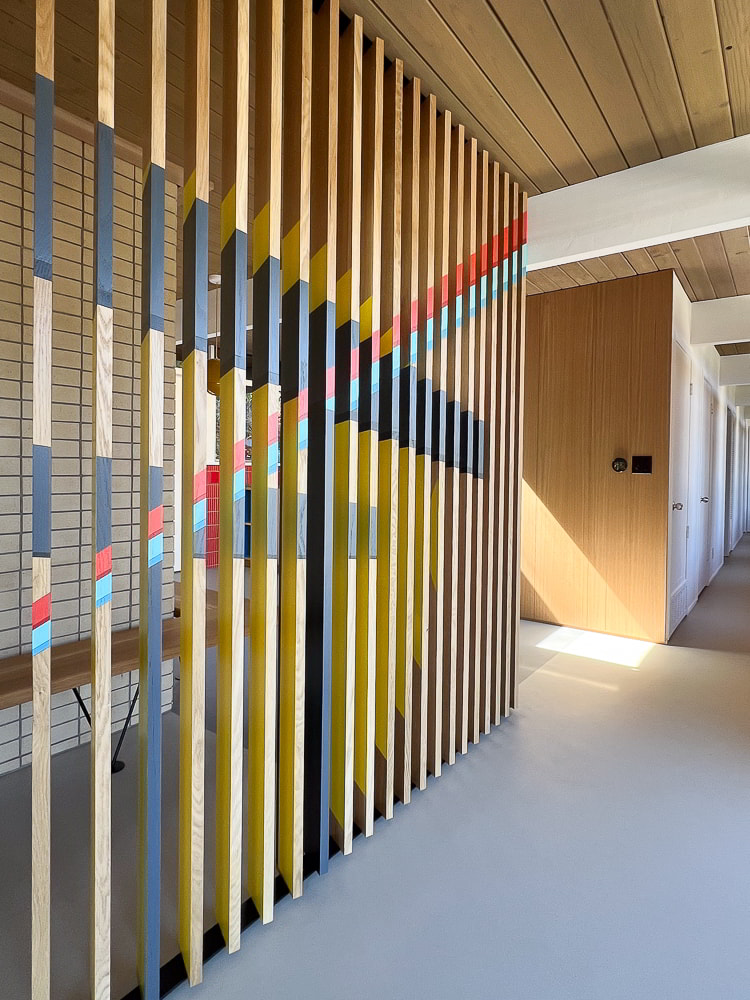
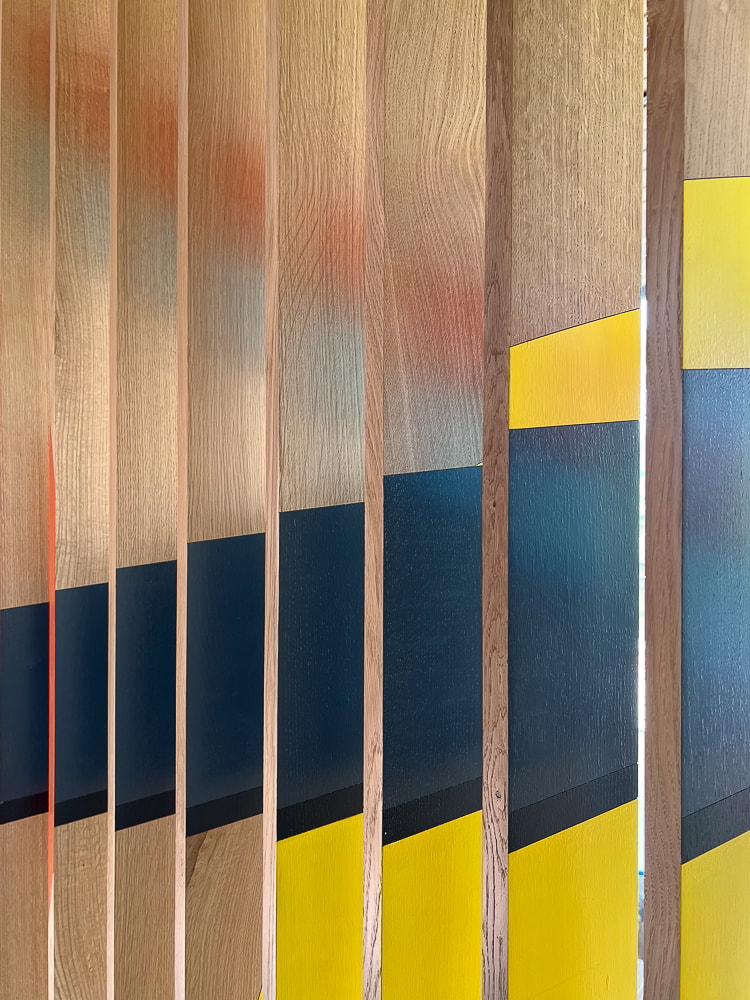
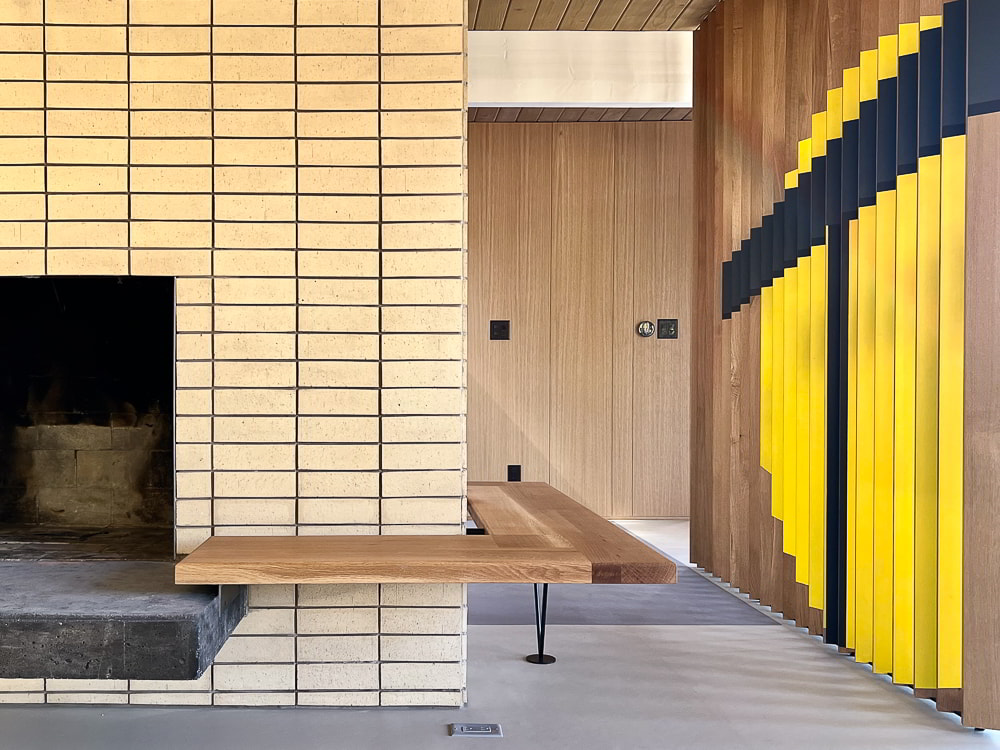
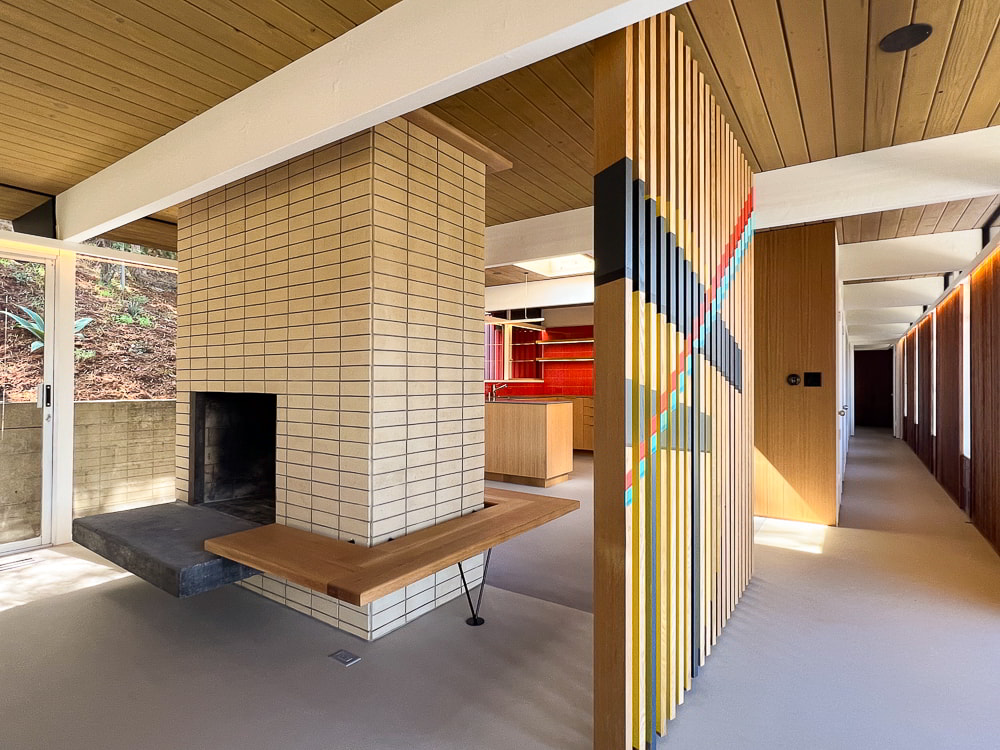
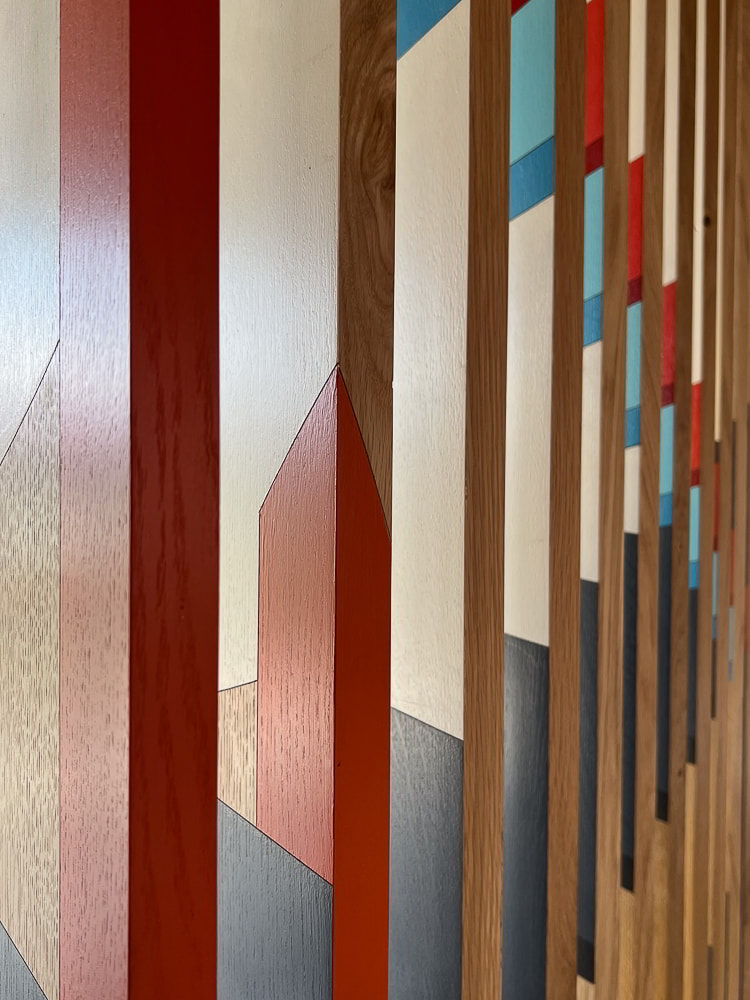
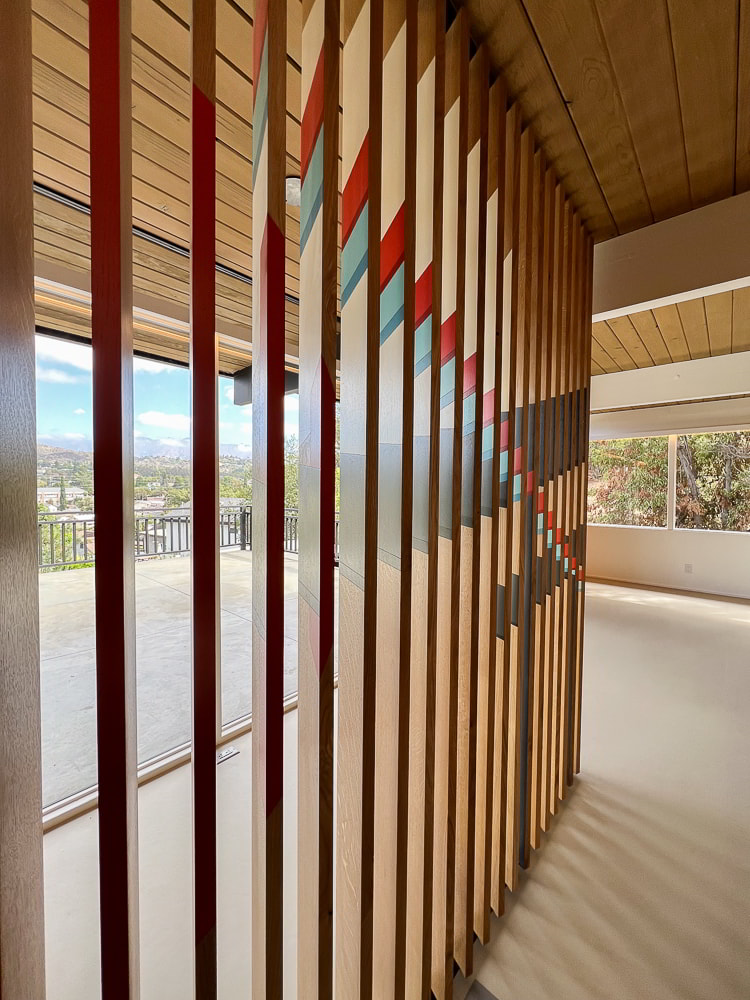
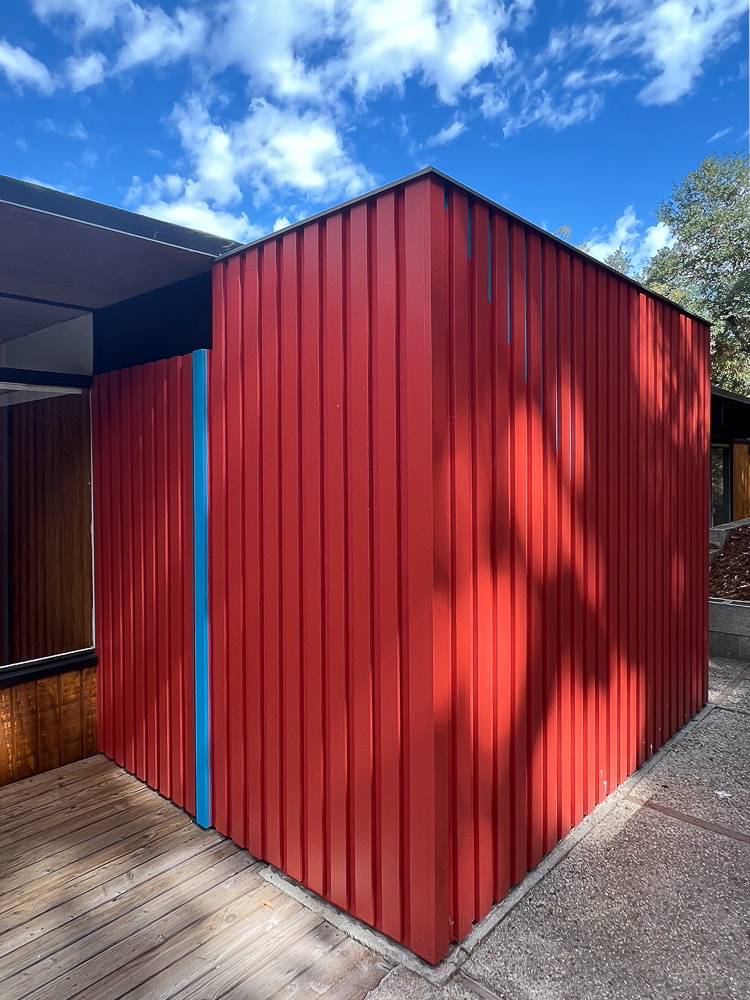
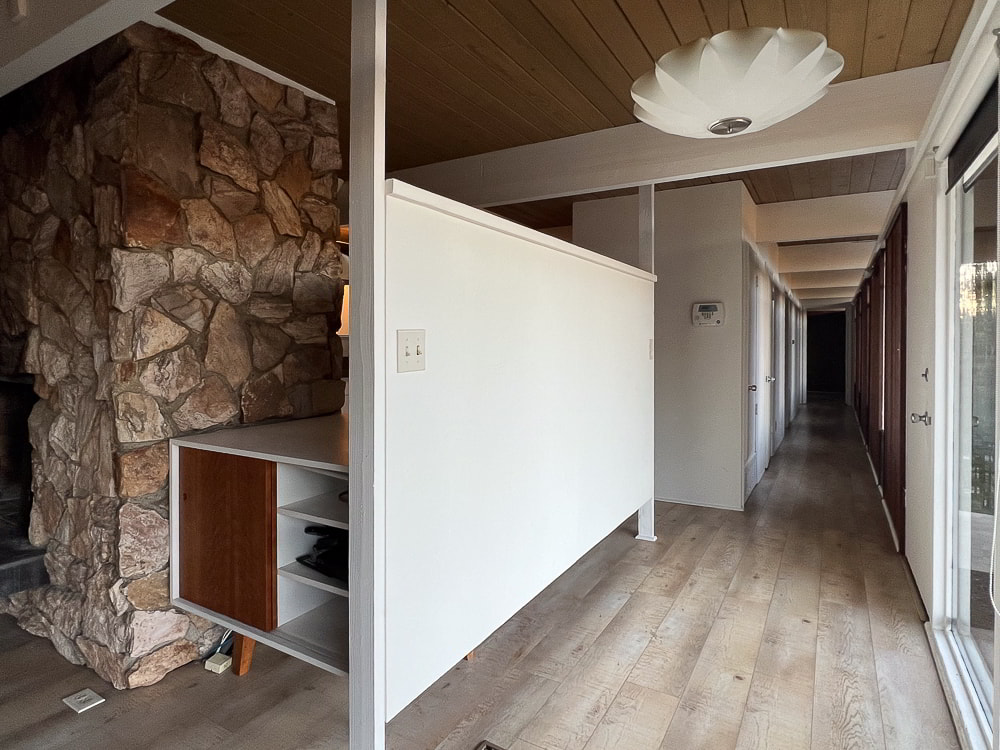
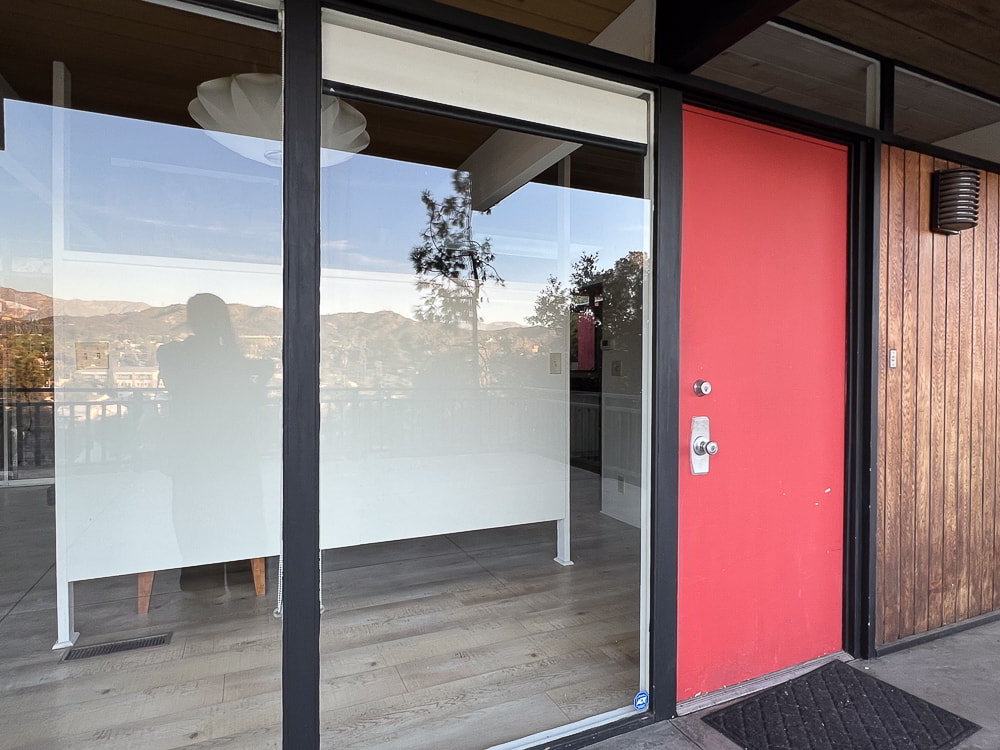
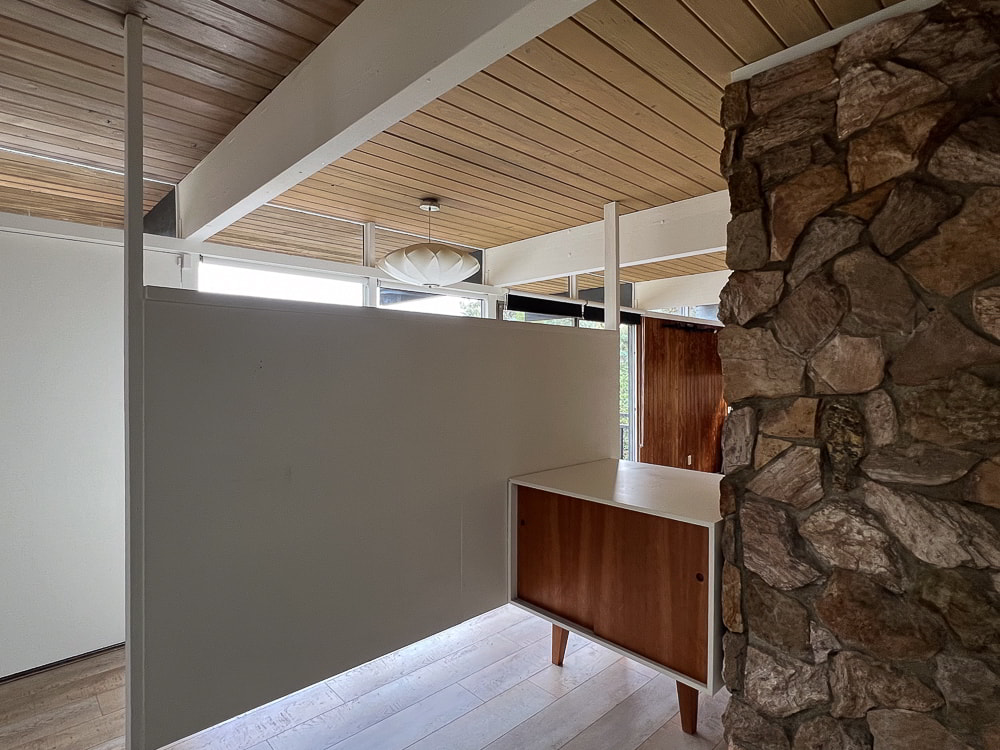
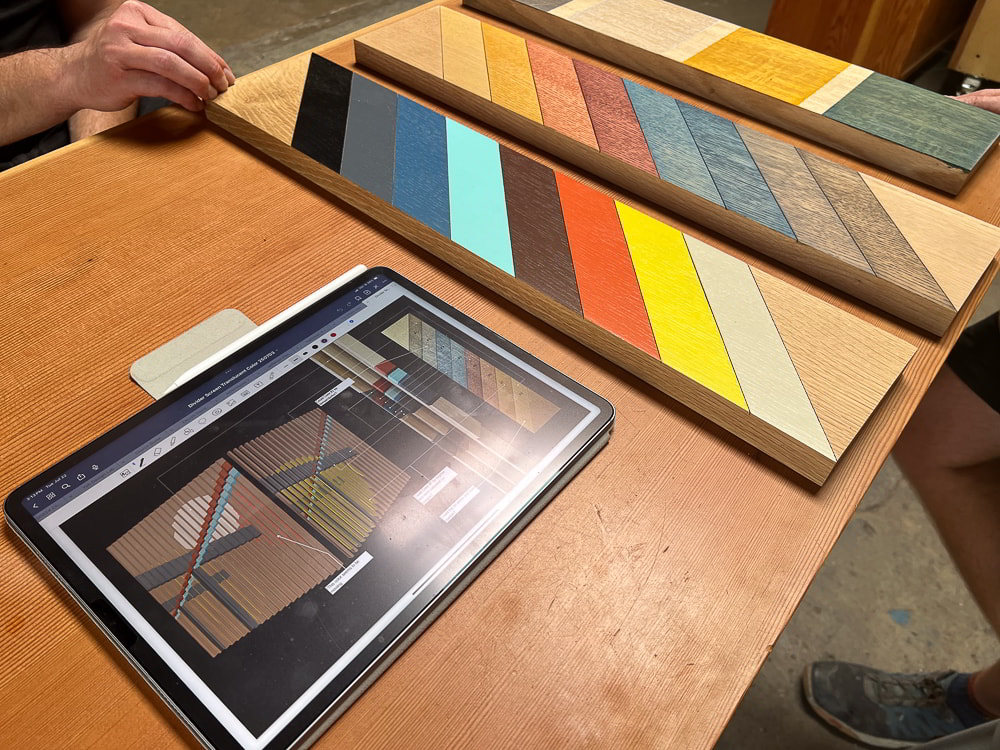
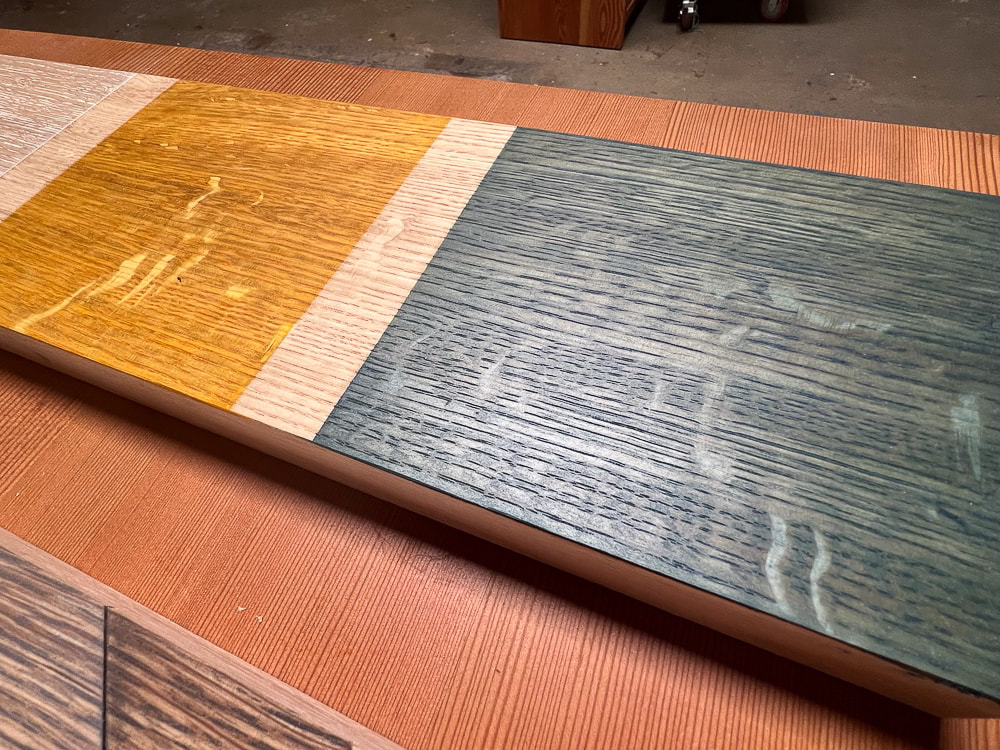
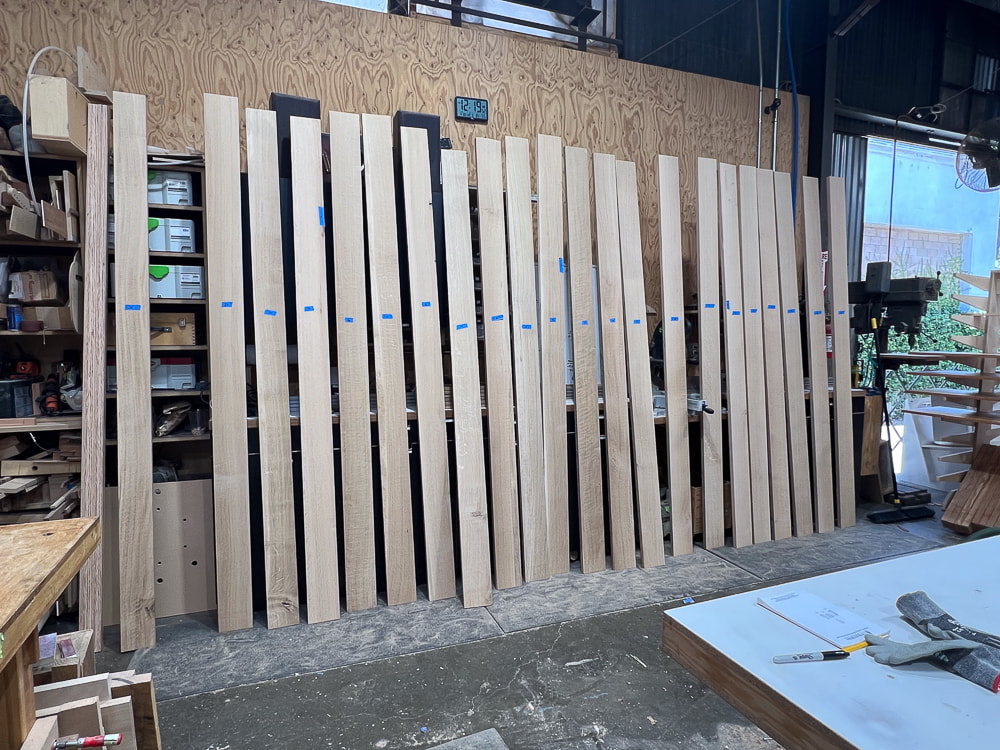
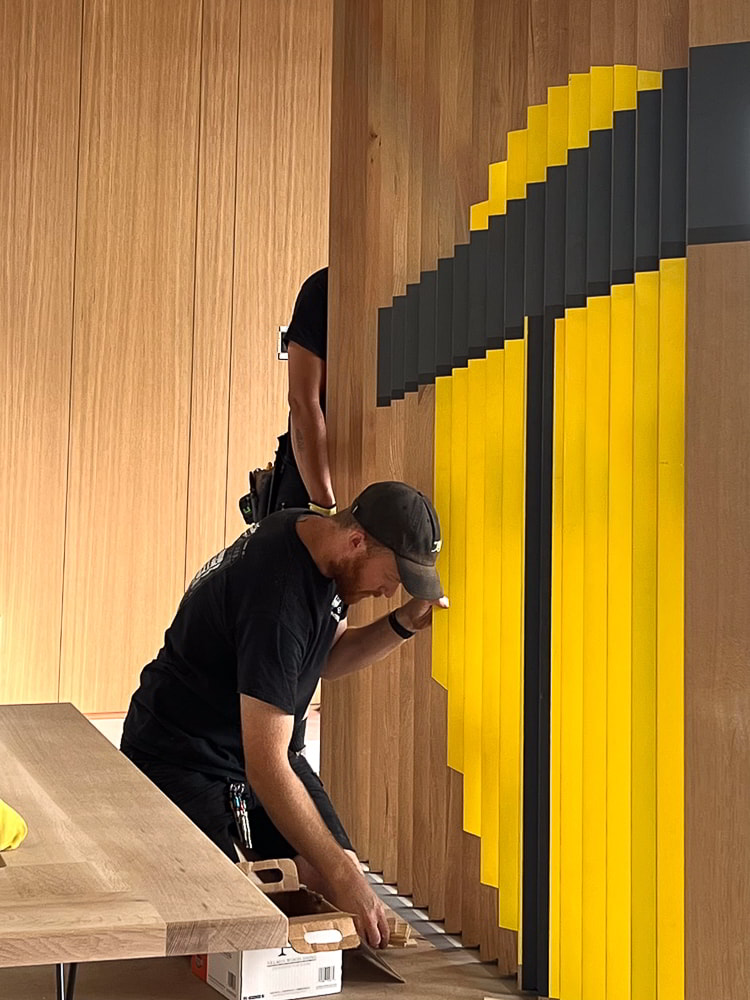
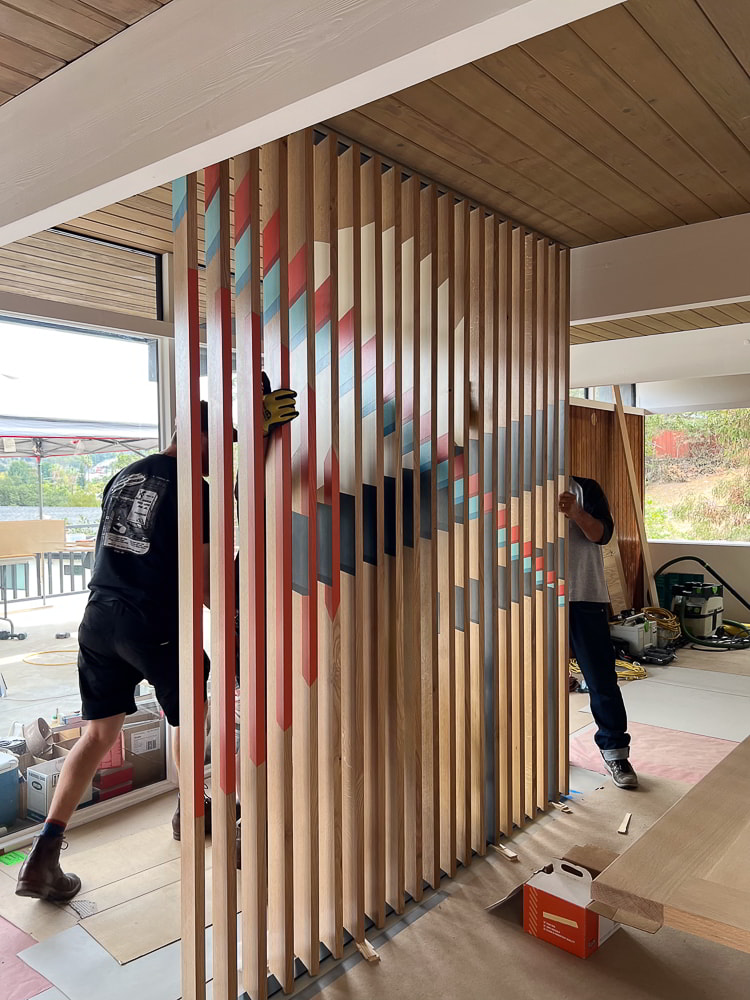
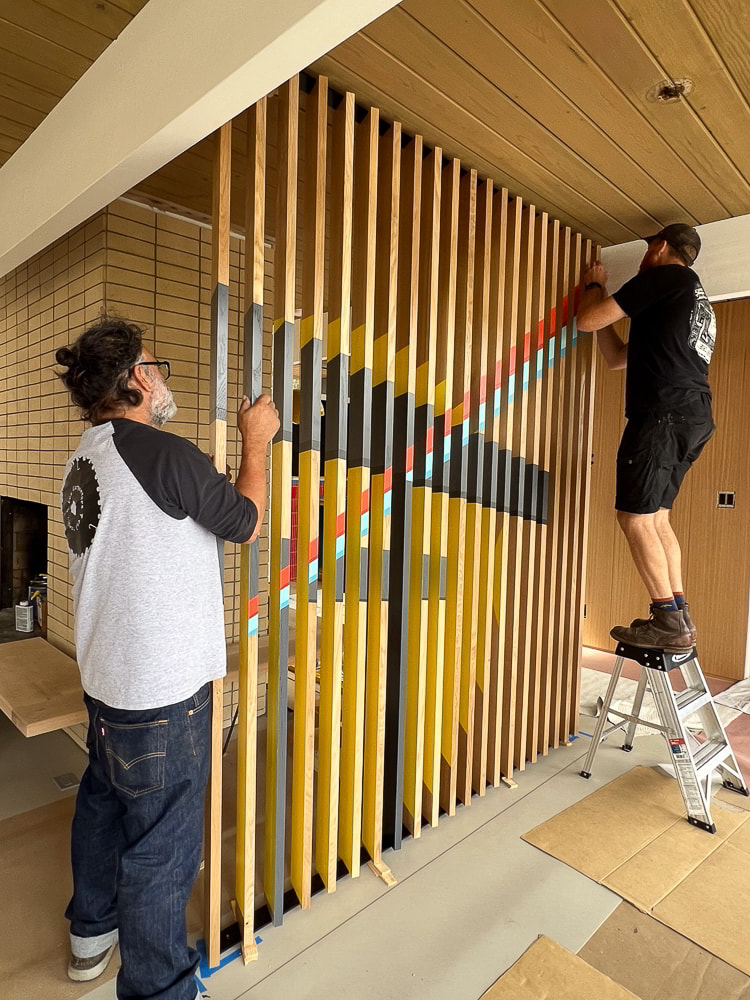
    A custom-designed screen, featuring a graphic interpretation of the sun’s path, was introduced to animate the interior and foster spatial interplay. It defines and subtly separates the foyer, living, and dining areas while maintaining visual and spatial continuity. The screen also restores a view corridor from the kitchen to the northern mountains and provides privacy for the living and dining zones from the main entry. This replaced a previously opaque privacy panel that had visually and functionally severed the kitchen and dining areas from the living room.
  • Kitchen Design
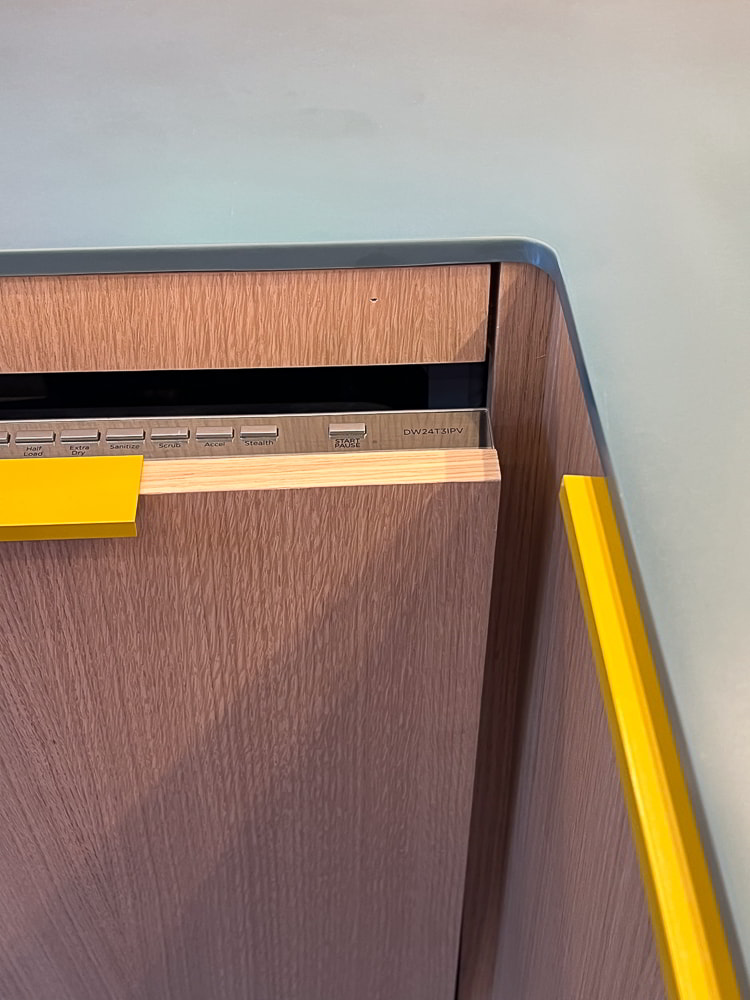
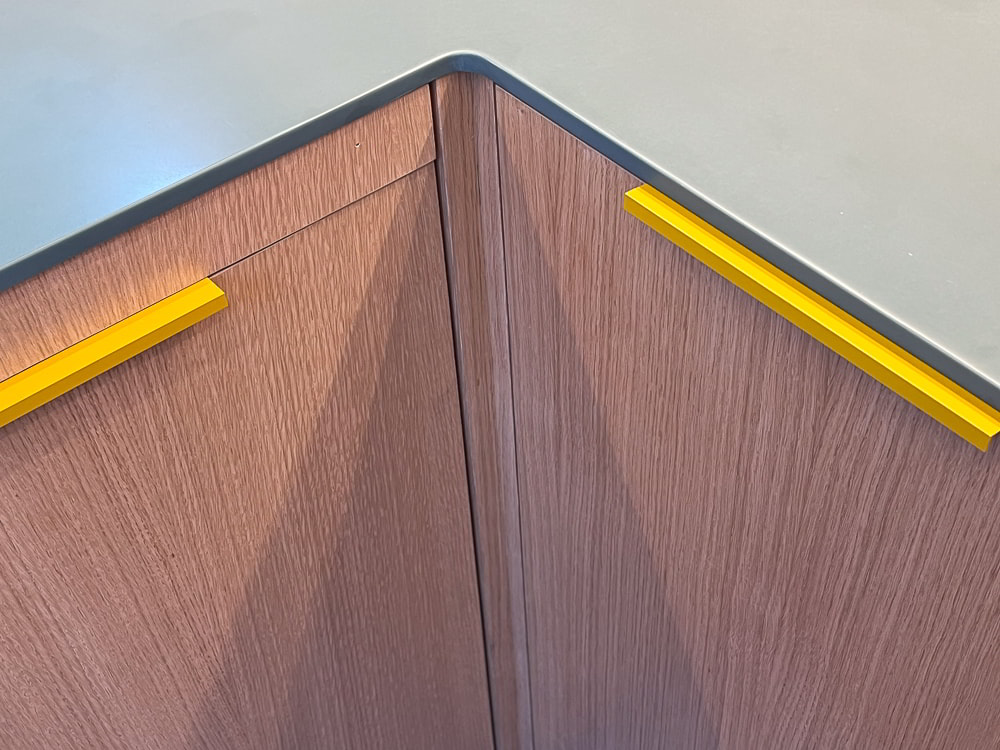
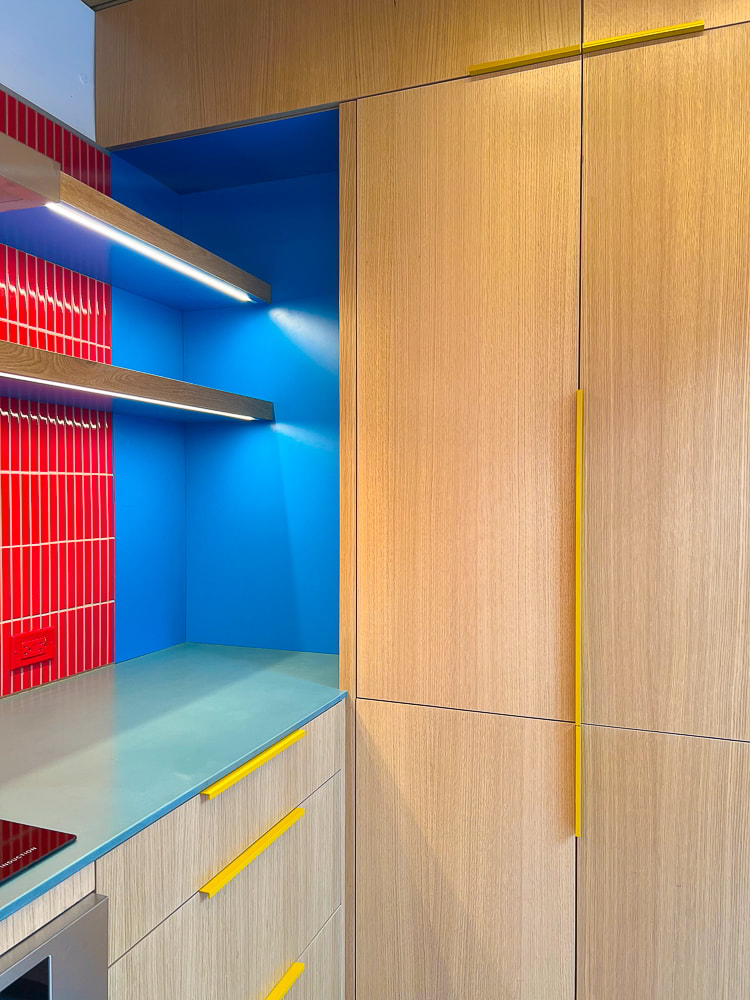
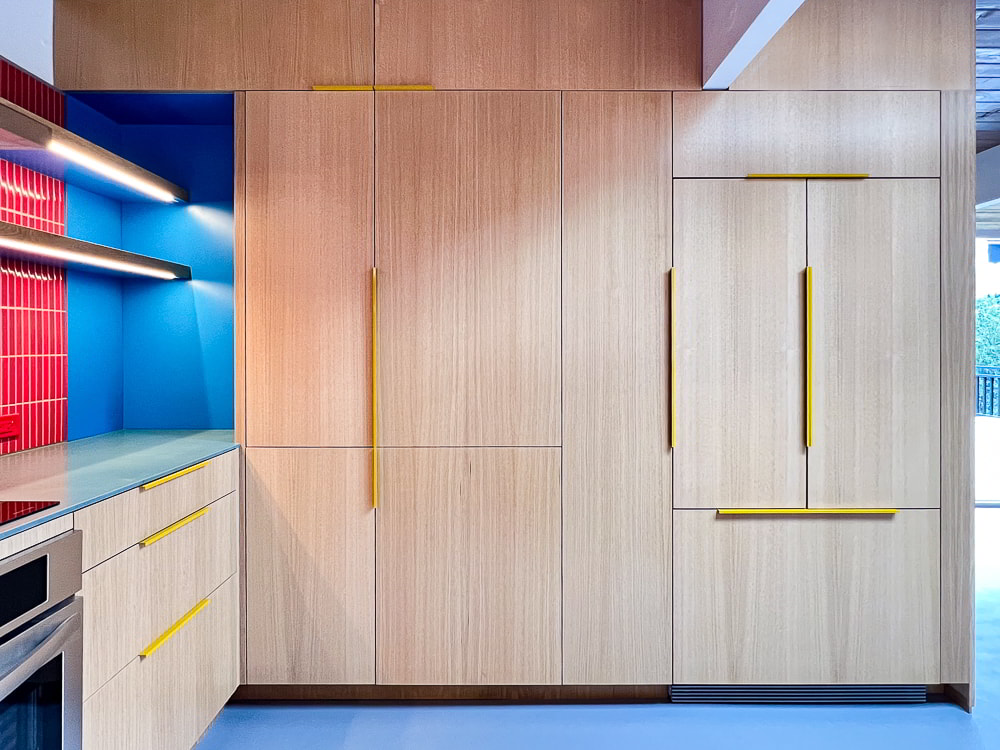
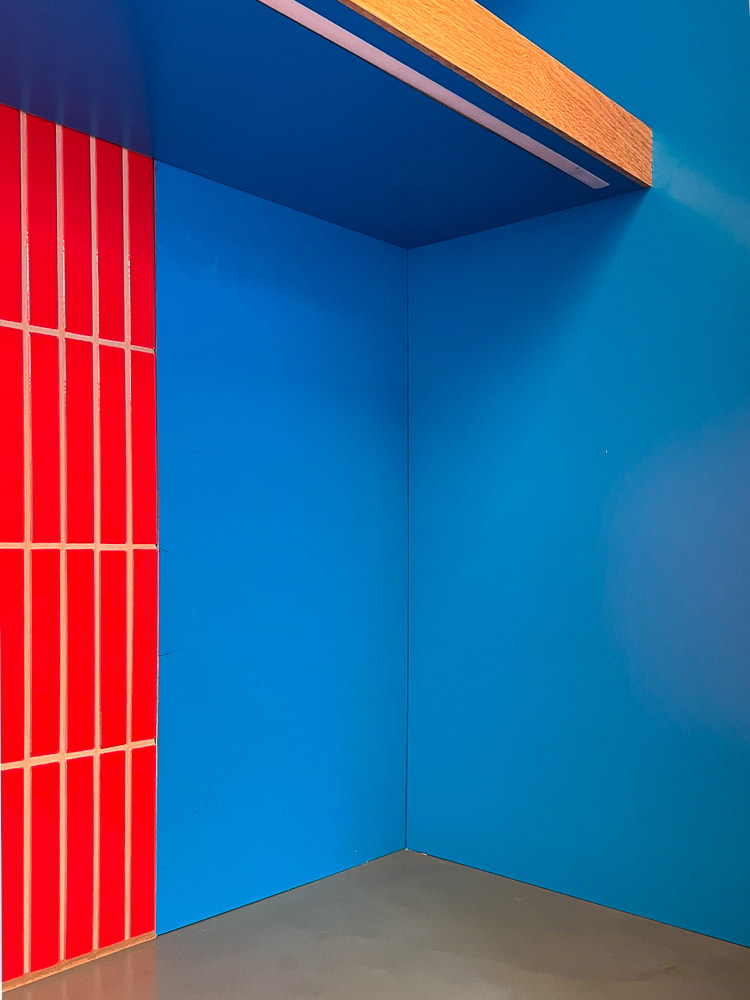
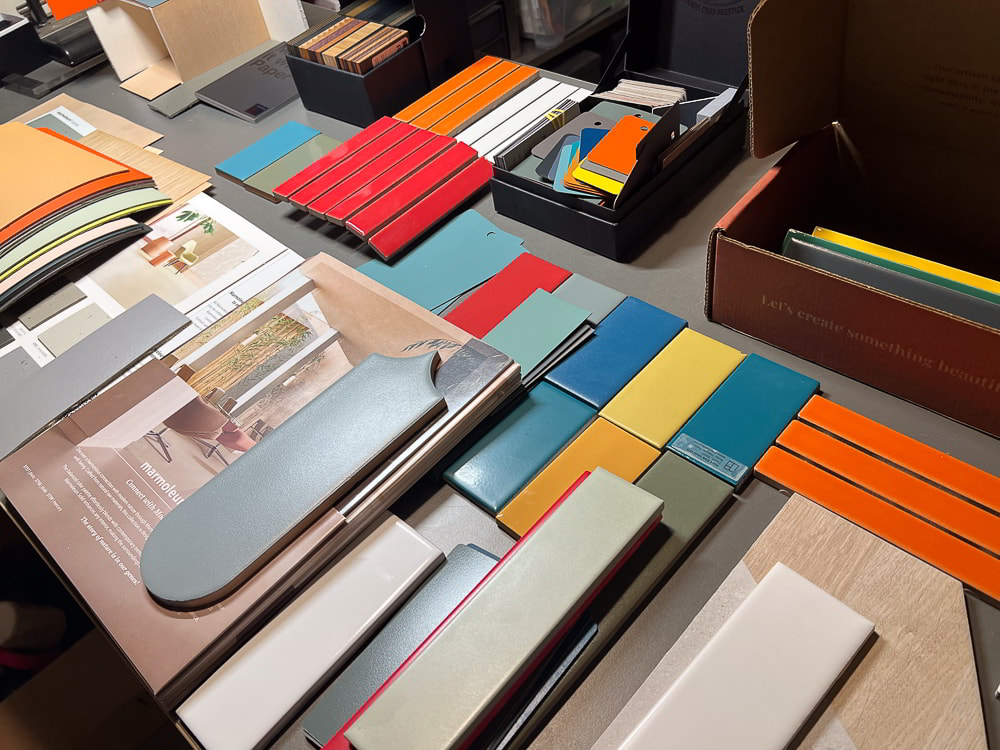
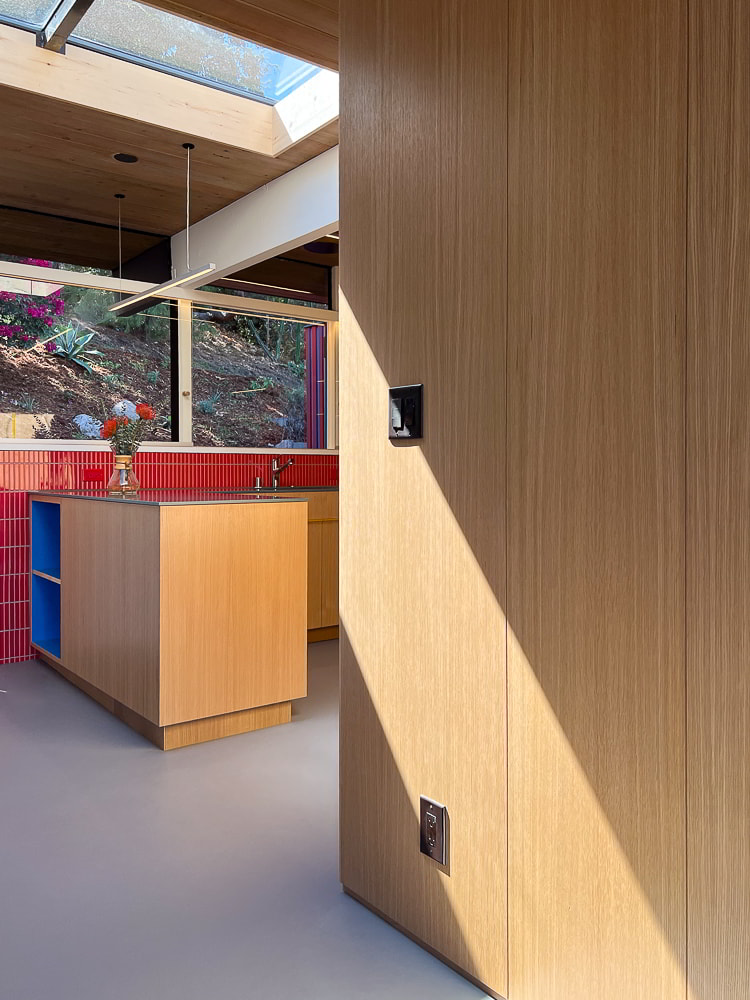
    The renovated kitchen features a vibrant palette and early to mid-century modern materials such as Corian and Formica to complement the existing exterior palette. Thoughtfully configured cabinetry provides generous storage for pantry staples and accommodates large and tall portable appliances. The sink is relocated to face the window for the enjoyment of the backyard as well as its connection with the new peninsula.
  • New Bench & Cladding around the Fireplace
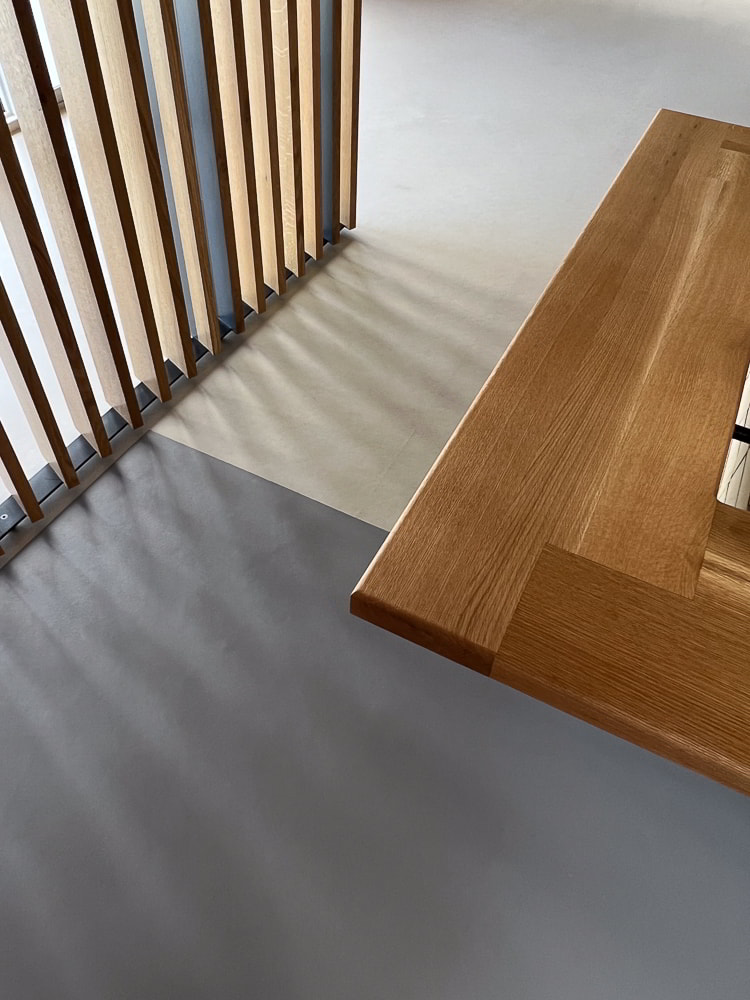
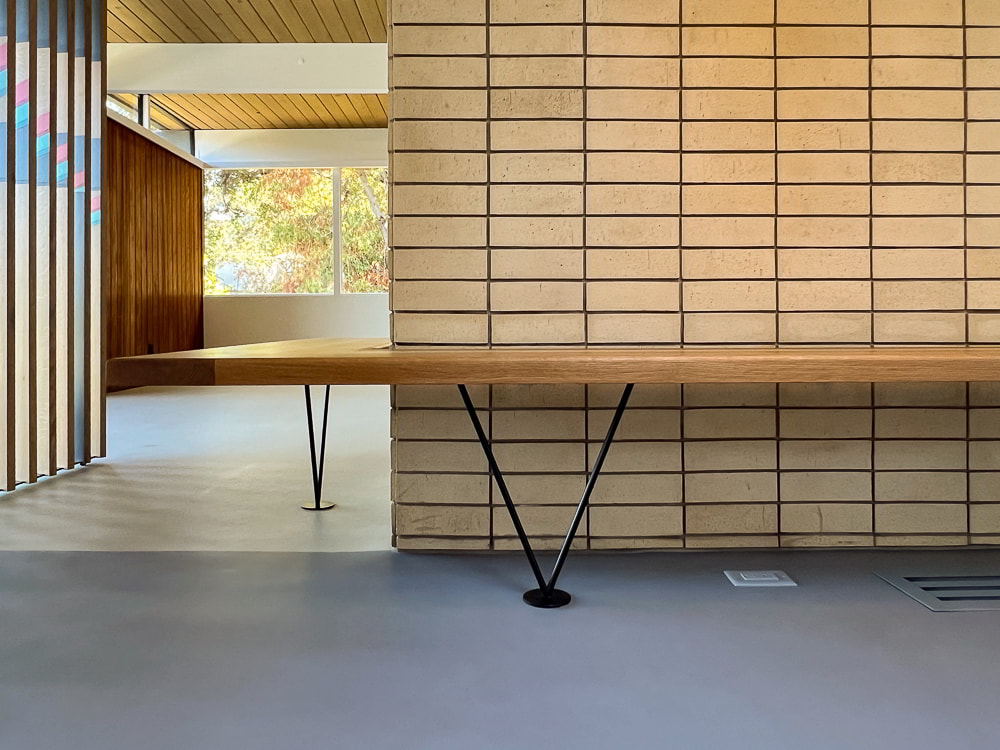
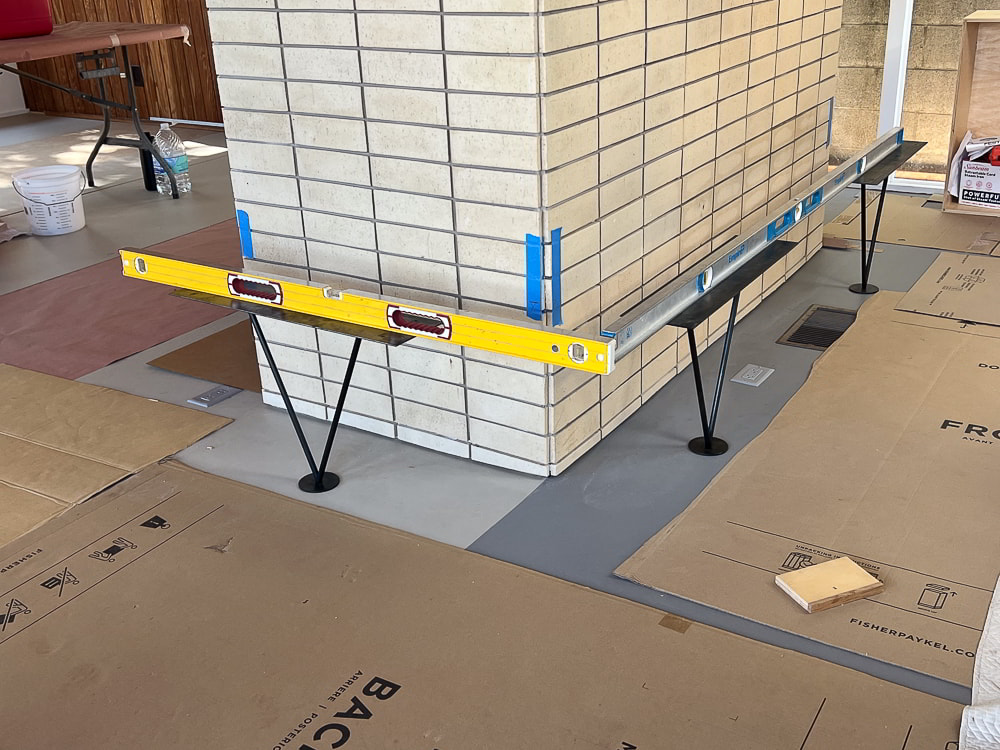
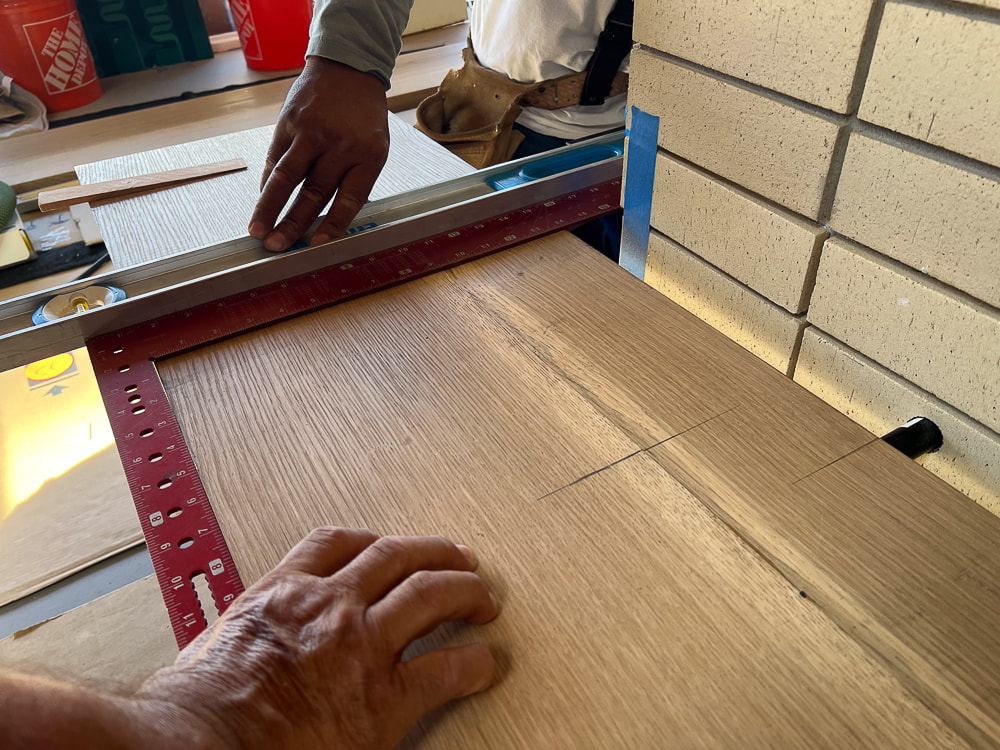
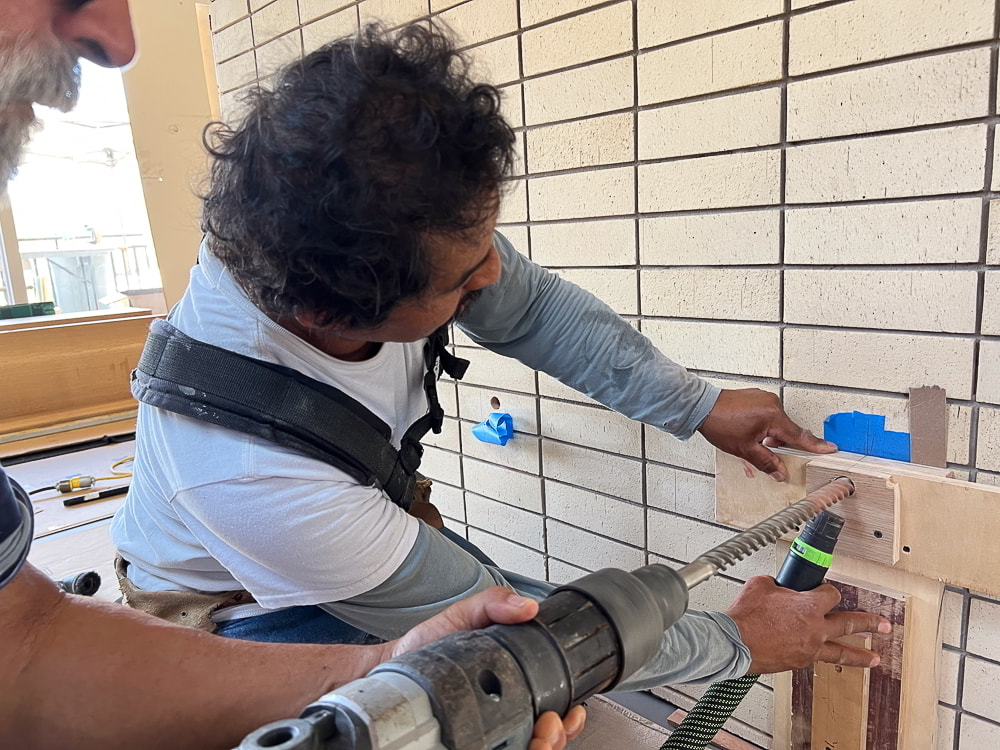
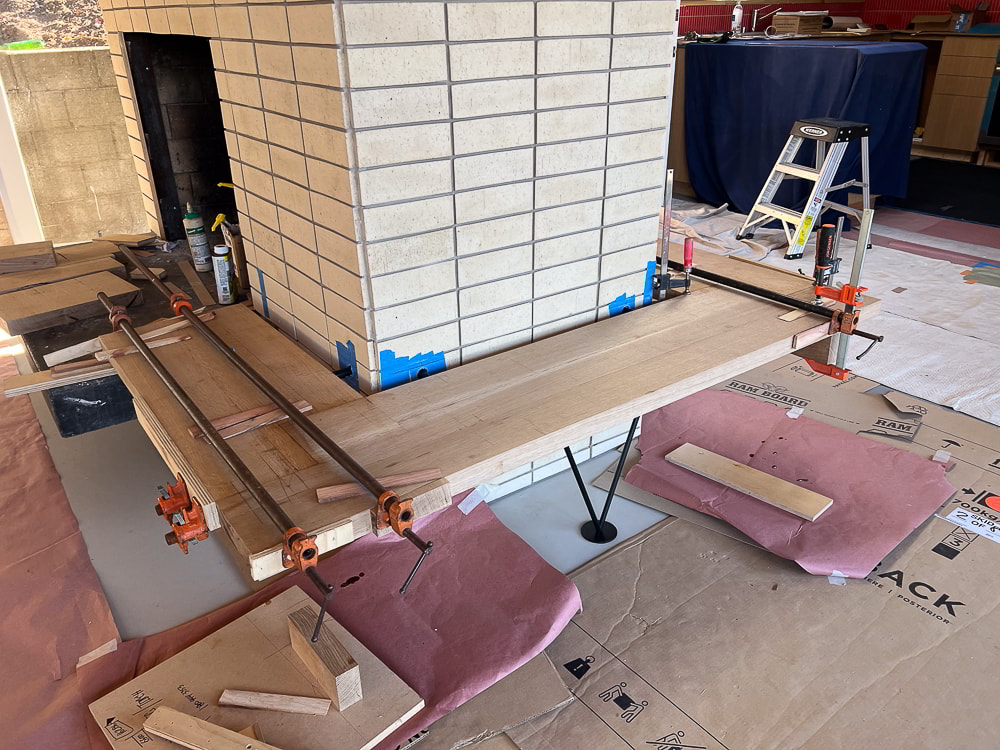
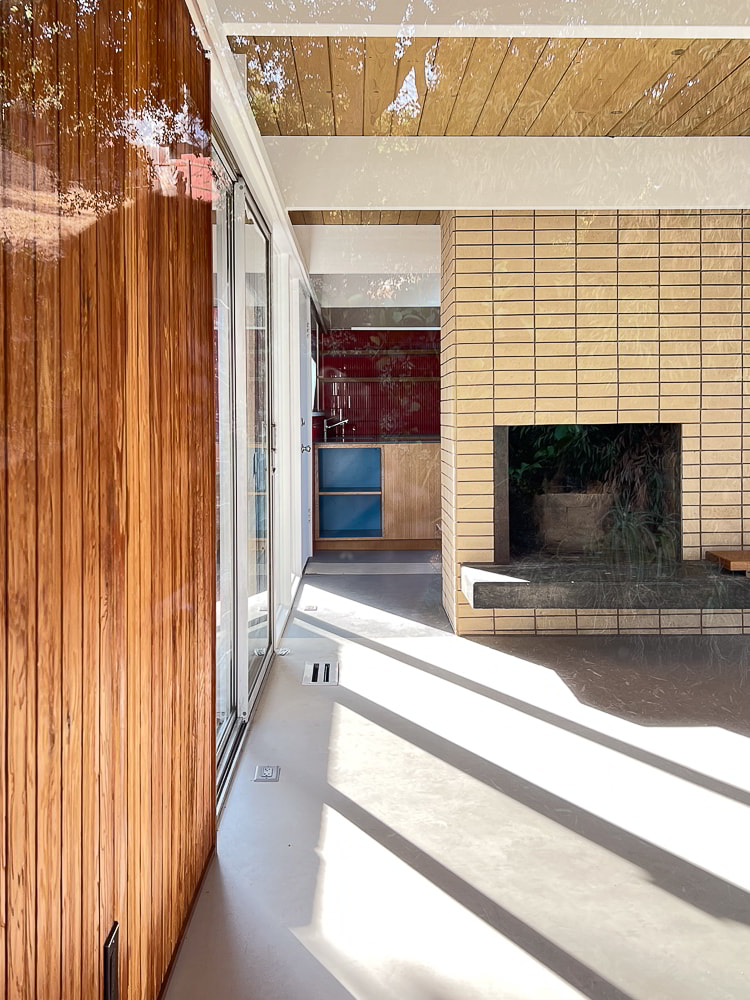
    A “floating,” wraparound bench—replacing an old media cabinet that obstructed circulation—was added to connect the living and dining rooms, while also providing a perch behind the new screen. New brick tiles replaced the old flagstone cladding, updating the fireplace’s appearance and allowing greater clearance for adjacent passageways.
  • Cove Light
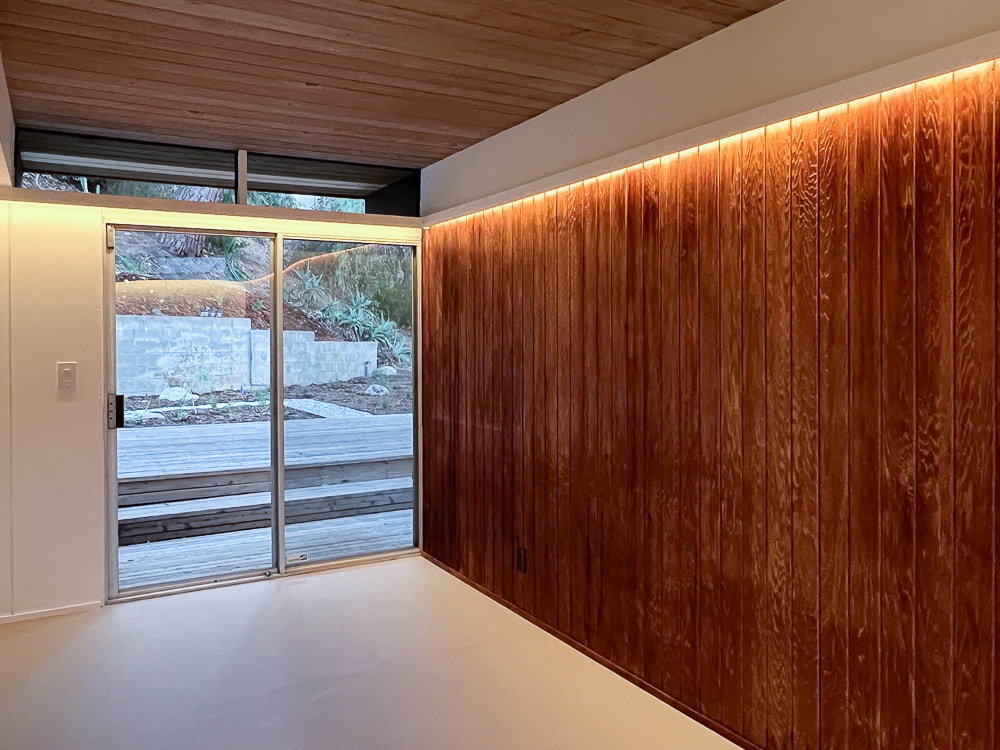
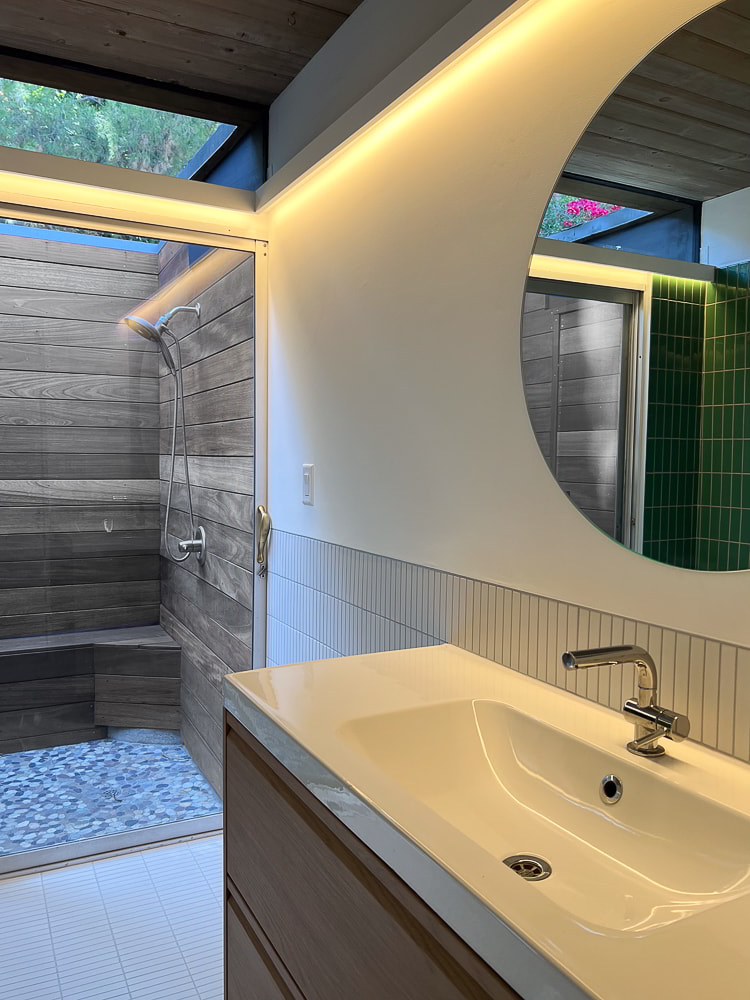
    LED cove lights were installed throughout the house, eliminating the need for interior wall sconces. Approximately 90% of the electrical wiring was also replaced.
  • Ground Floor Entry Area
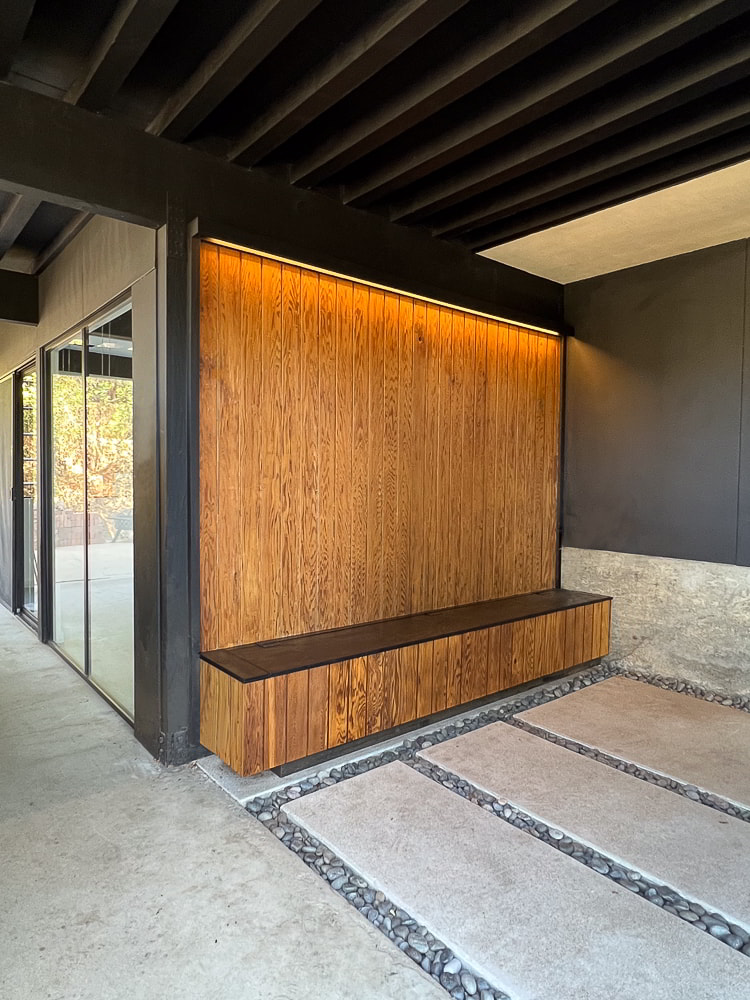
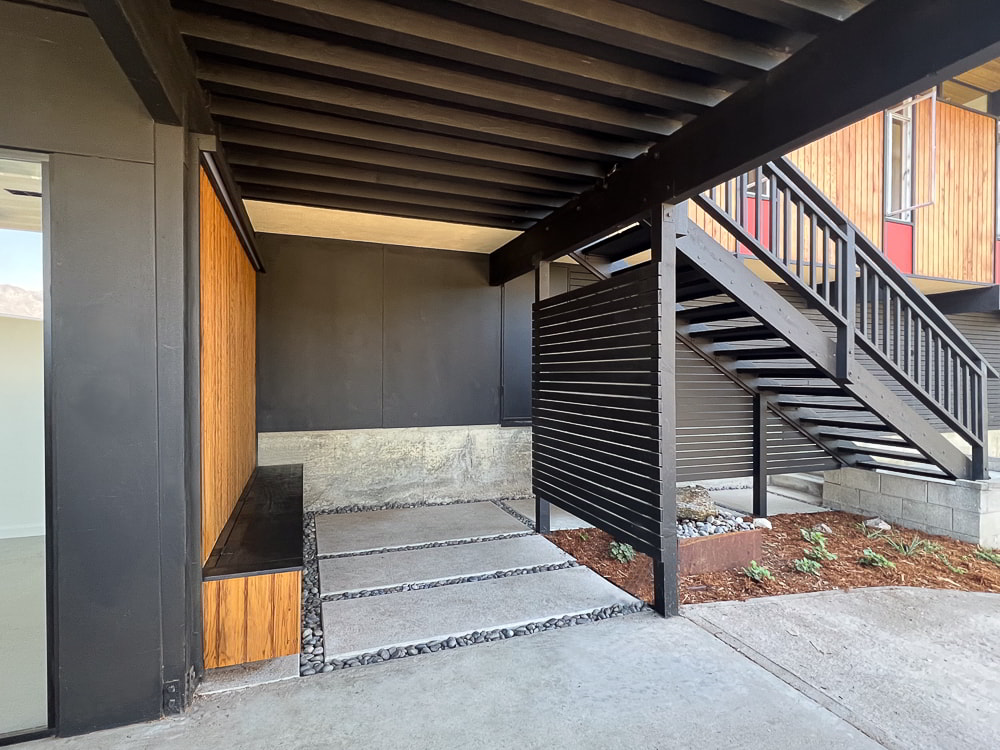
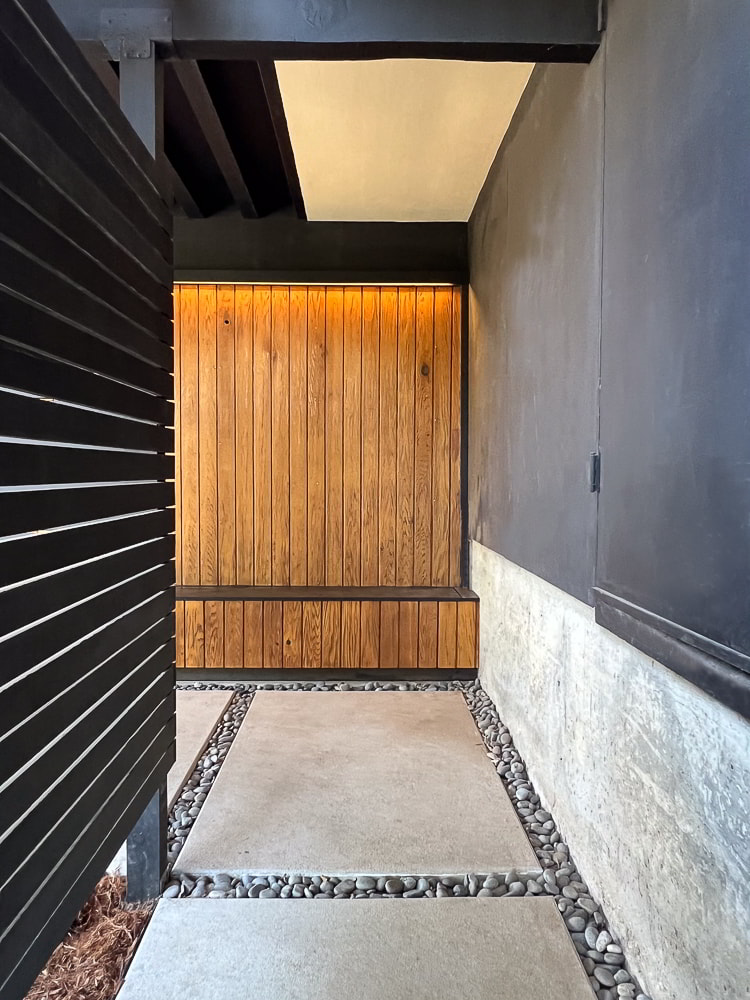
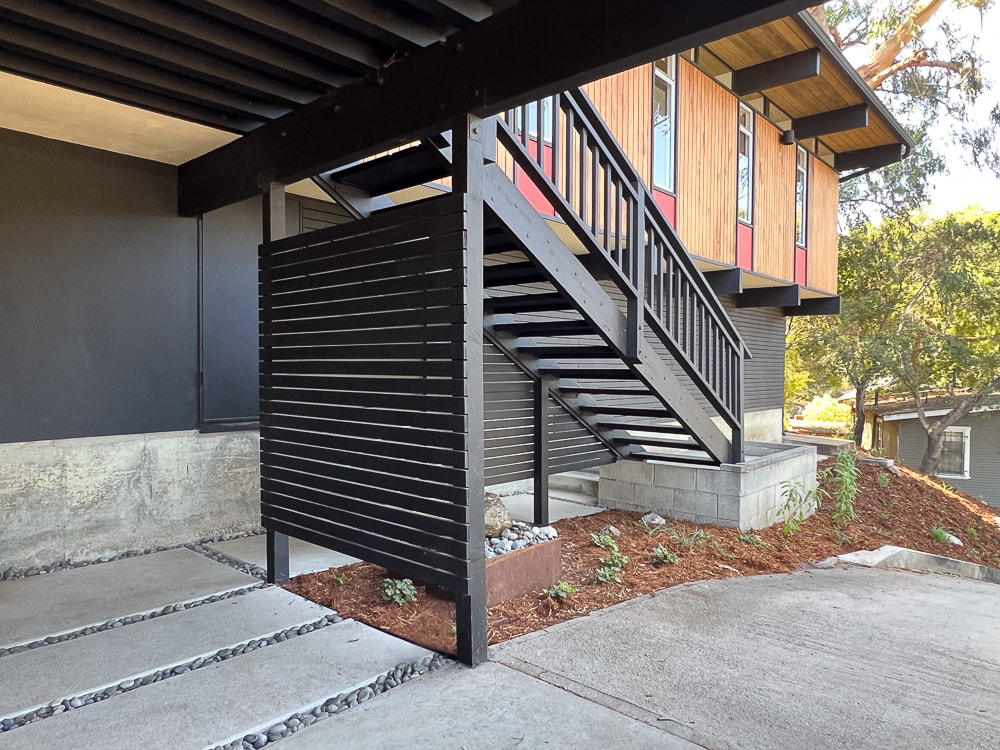
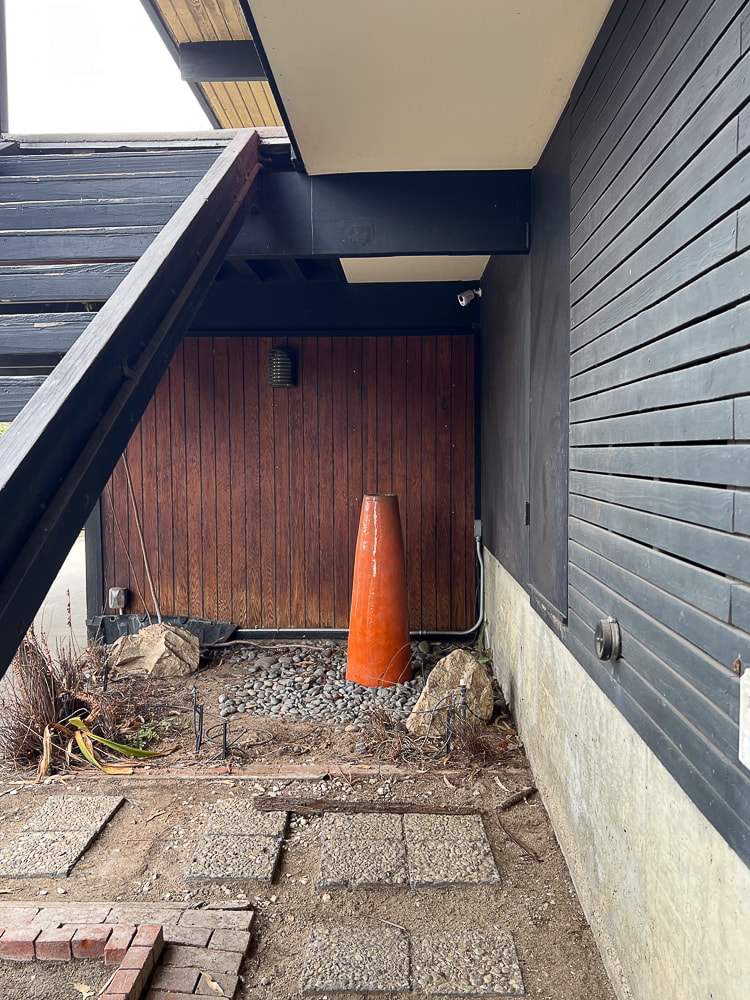
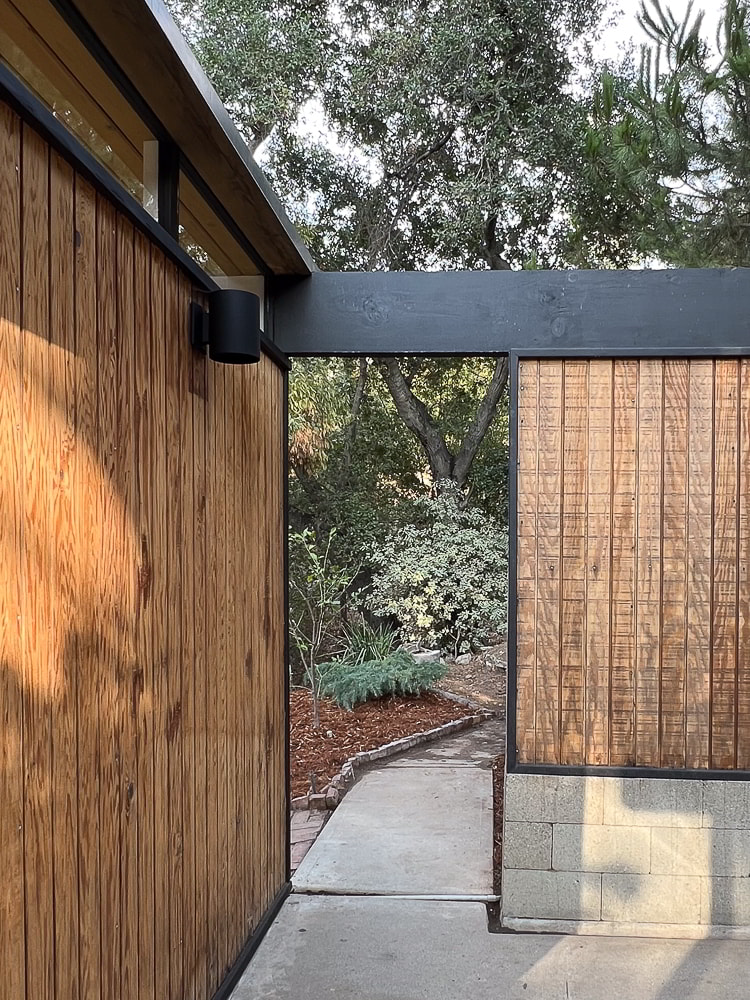
    A new portico and entry pathway offer privacy and rain protection, replacing the previous circulation route beneath the open-riser stairs. The bench at the portico provides a dry area for package drop-off, as well as storage, loading/unloading space, and a sitting area serving the carport.

RESTORATION:

  • Beam End Replacement
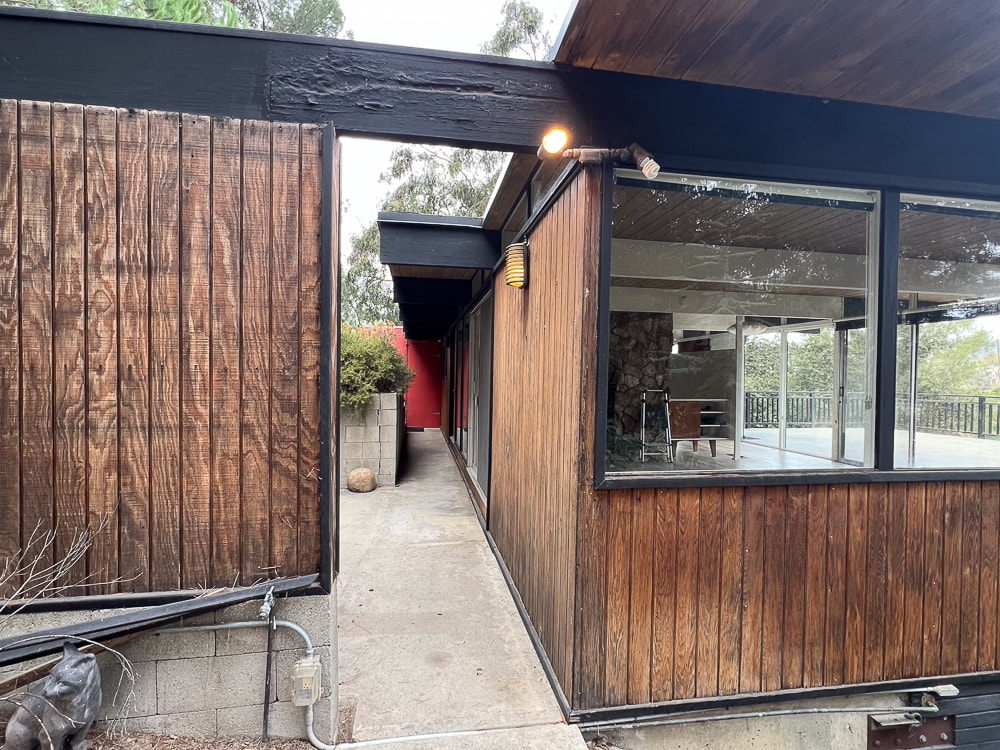
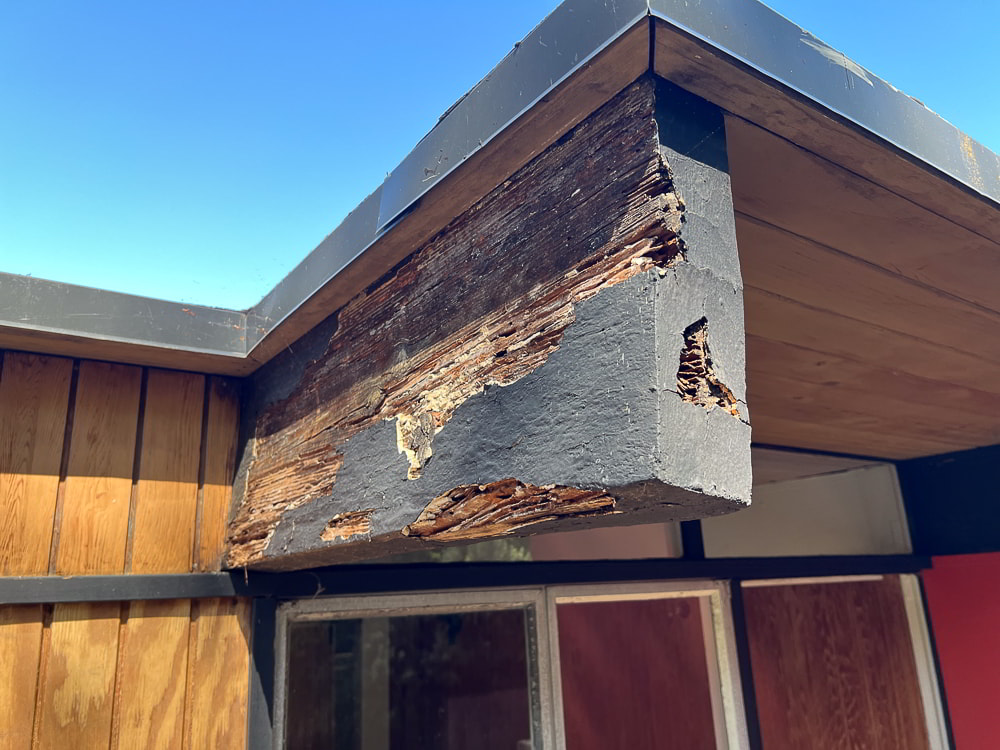
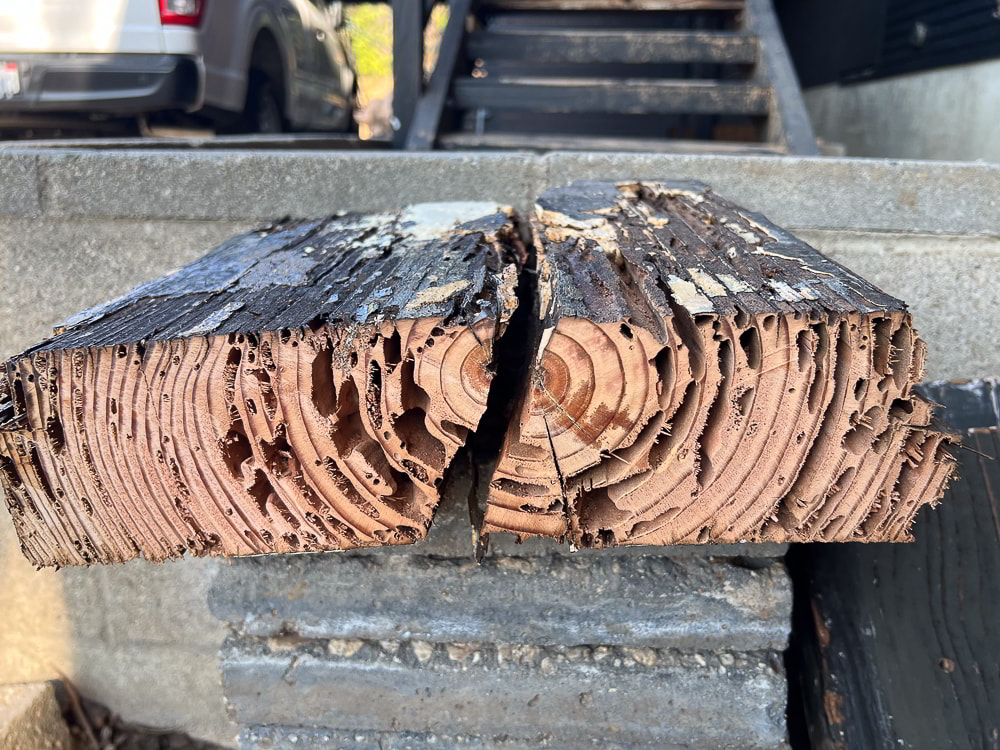
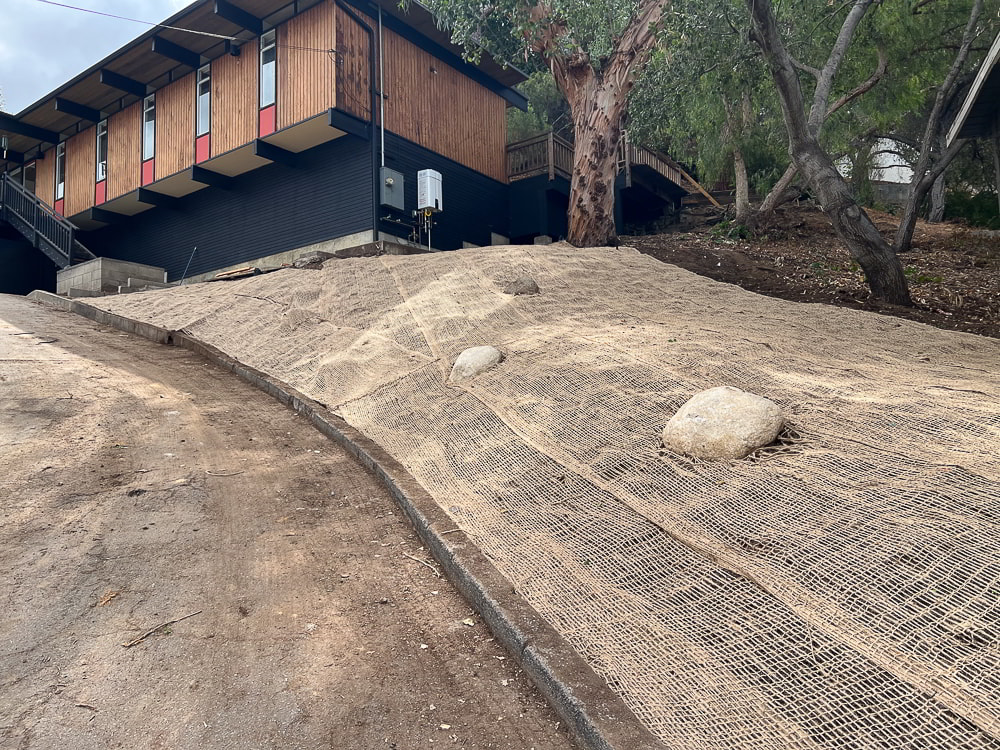
    Unprotected beam ends are among the most vulnerable elements in mid-century modern structures. This 1961 post-and-beam building exhibited typical signs of deterioration: moisture damage, termite intrusion, and rot-induced twisting. Several cantilevered beam portions were replaced and spliced back into the primary structure.
  • Weldwood Plywood Panels
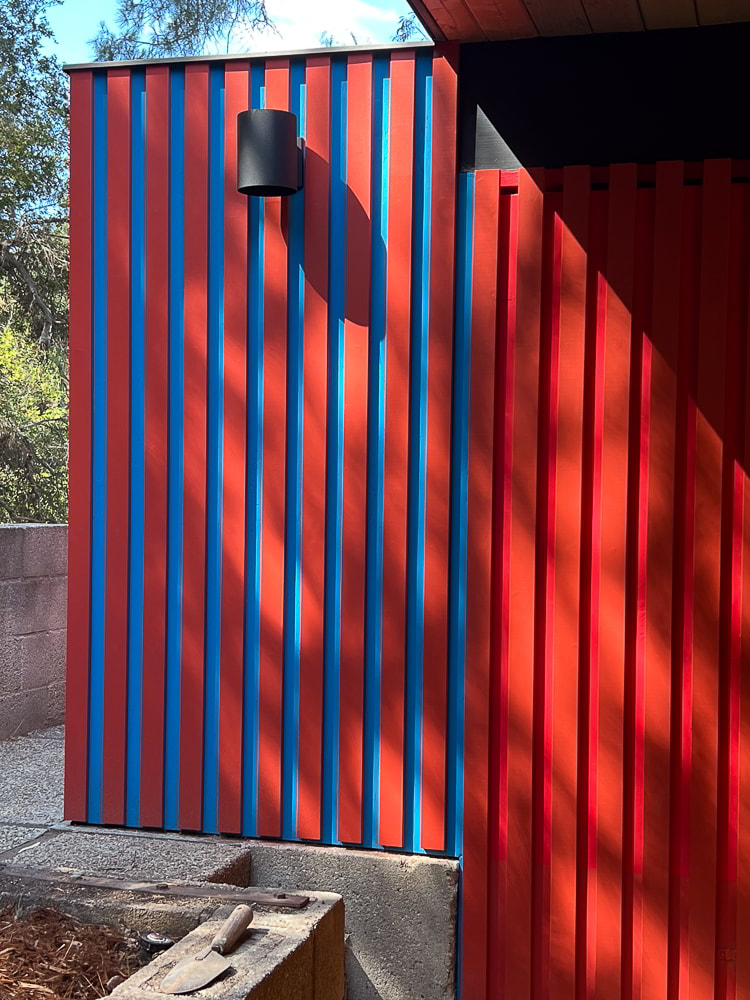
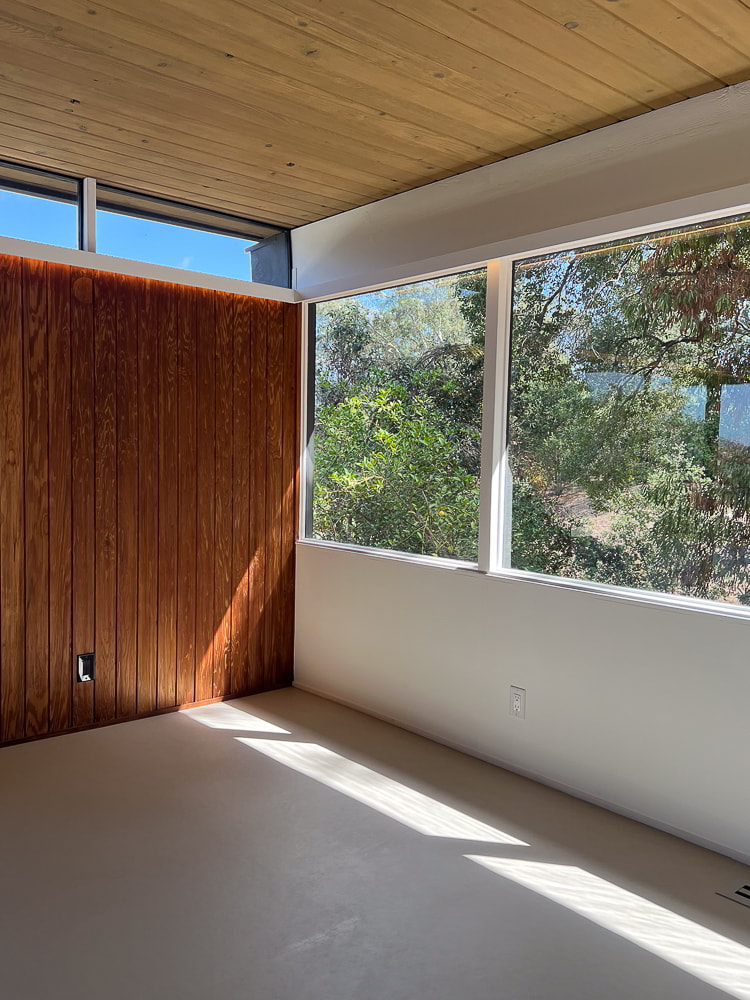
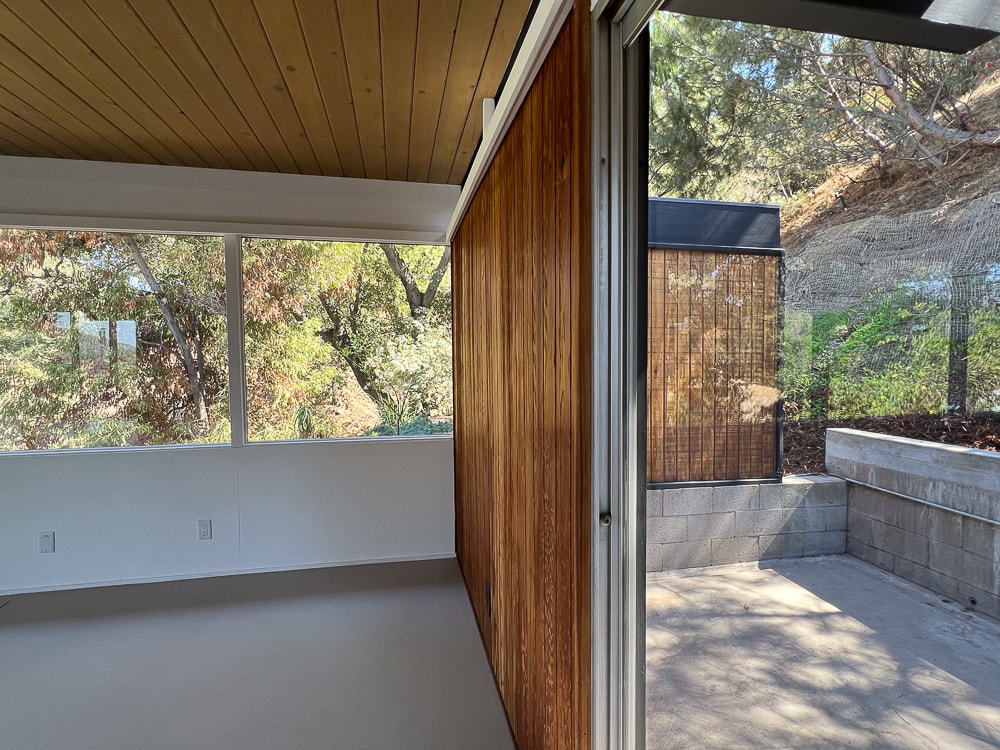
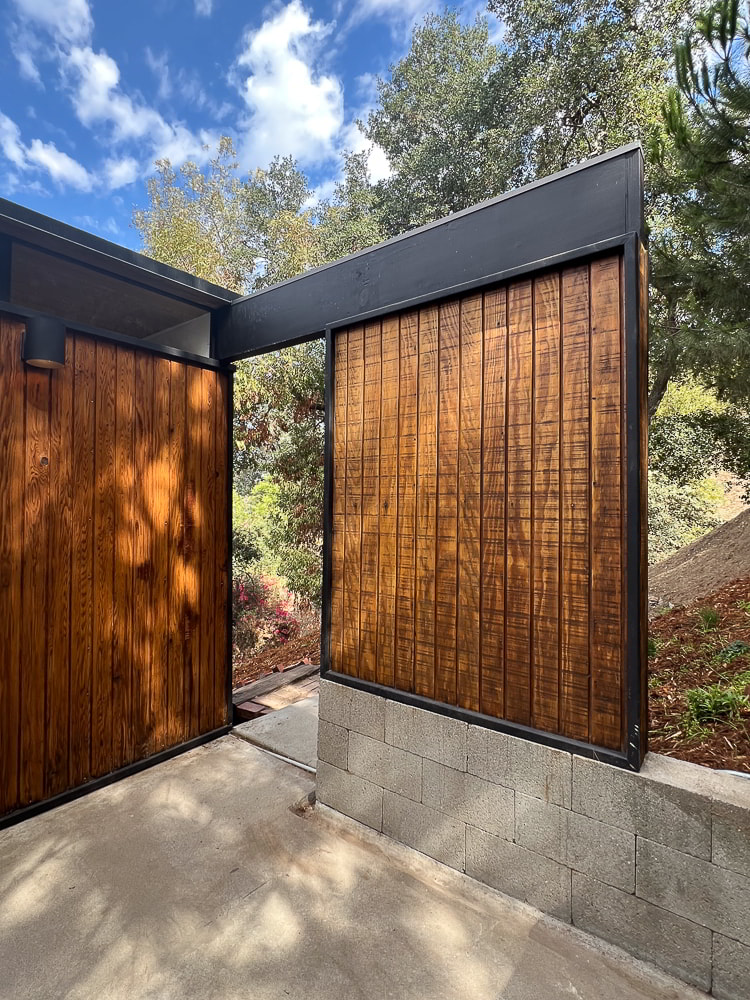
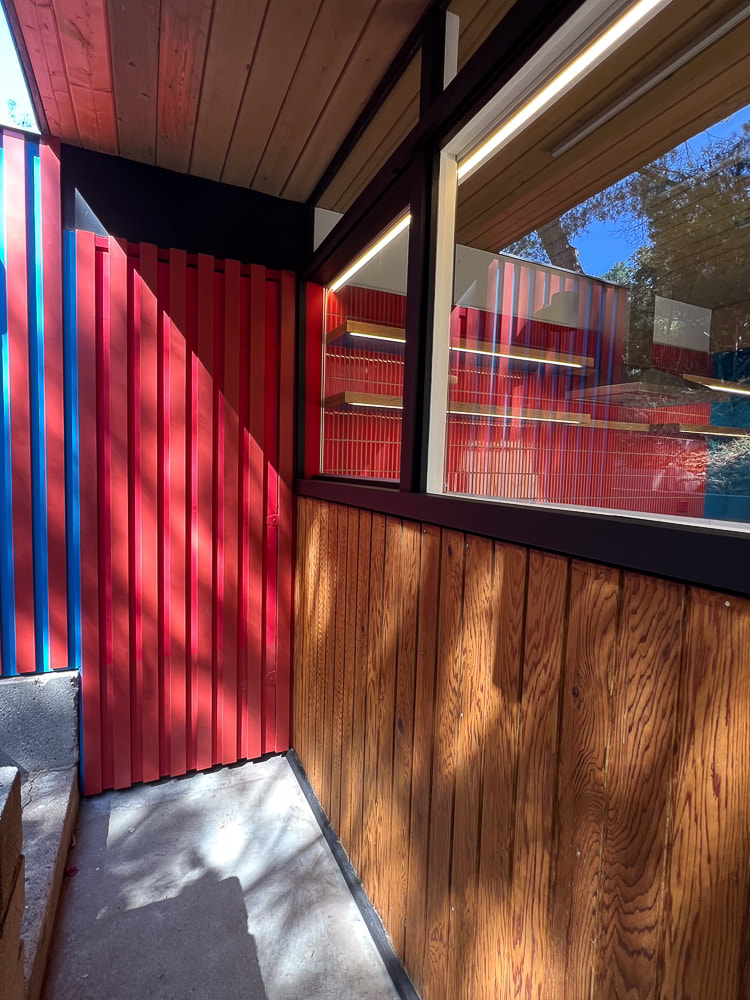
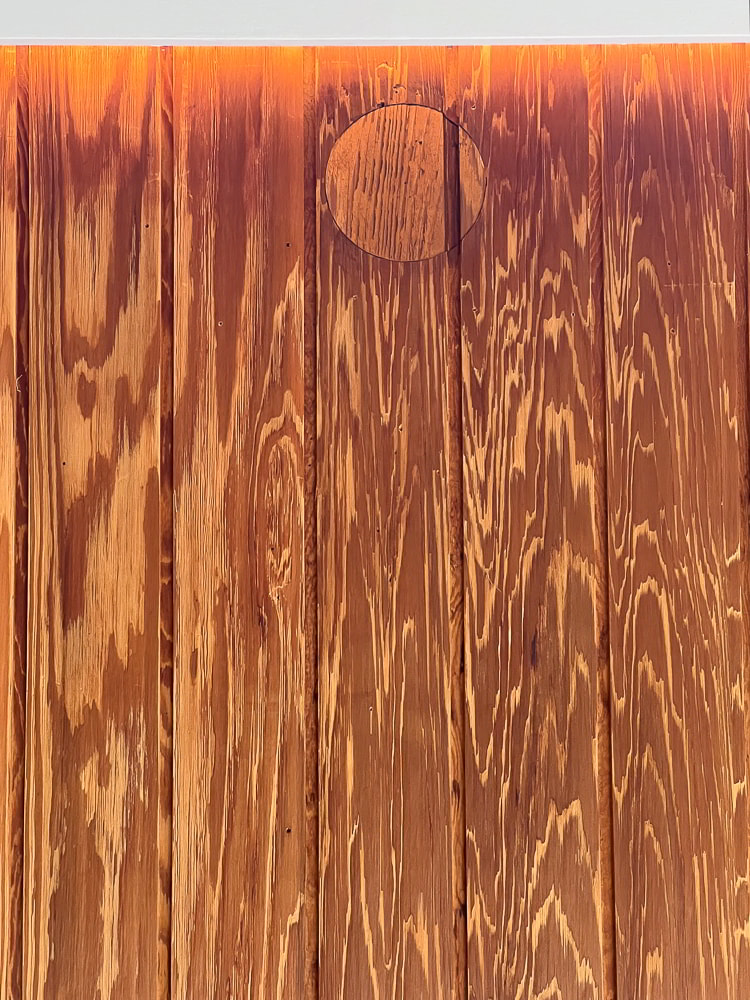
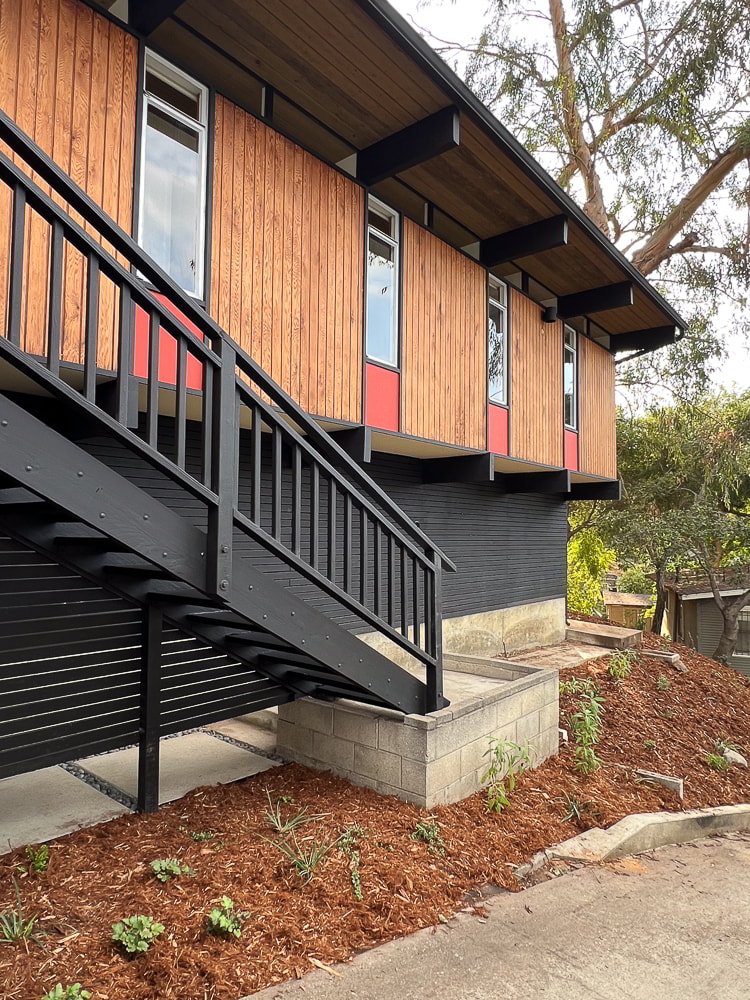
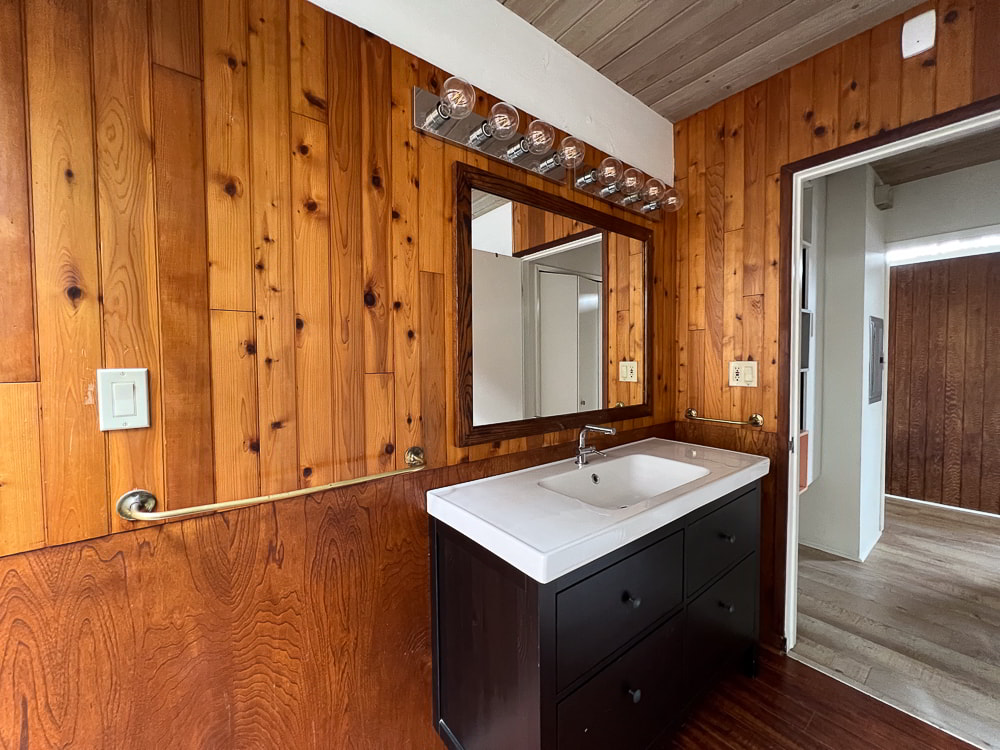
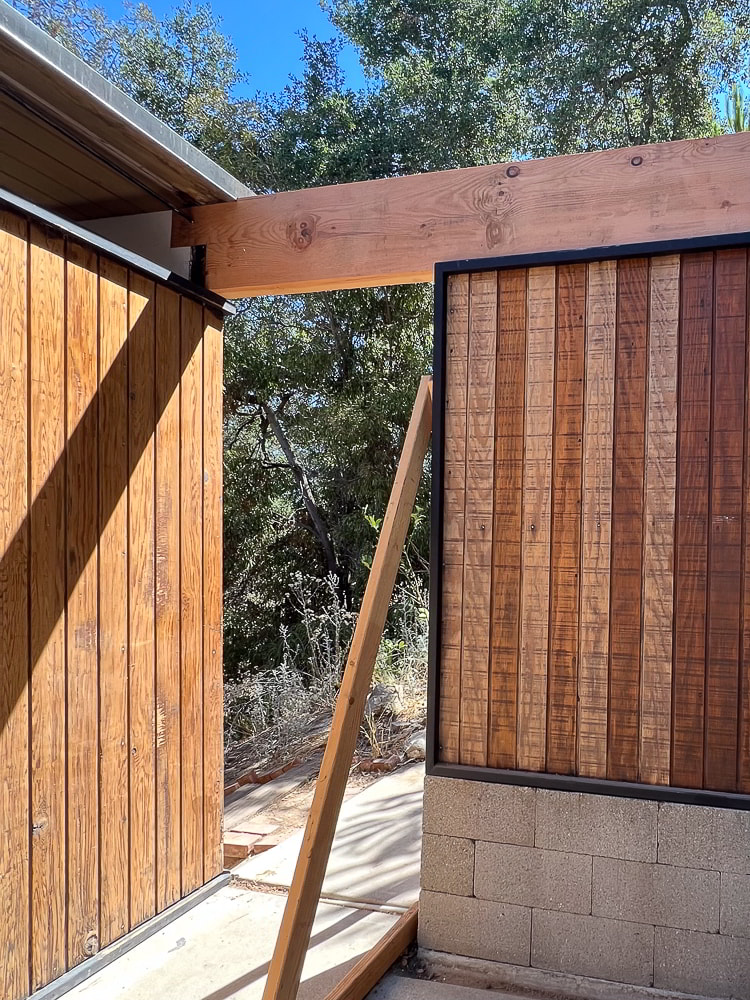
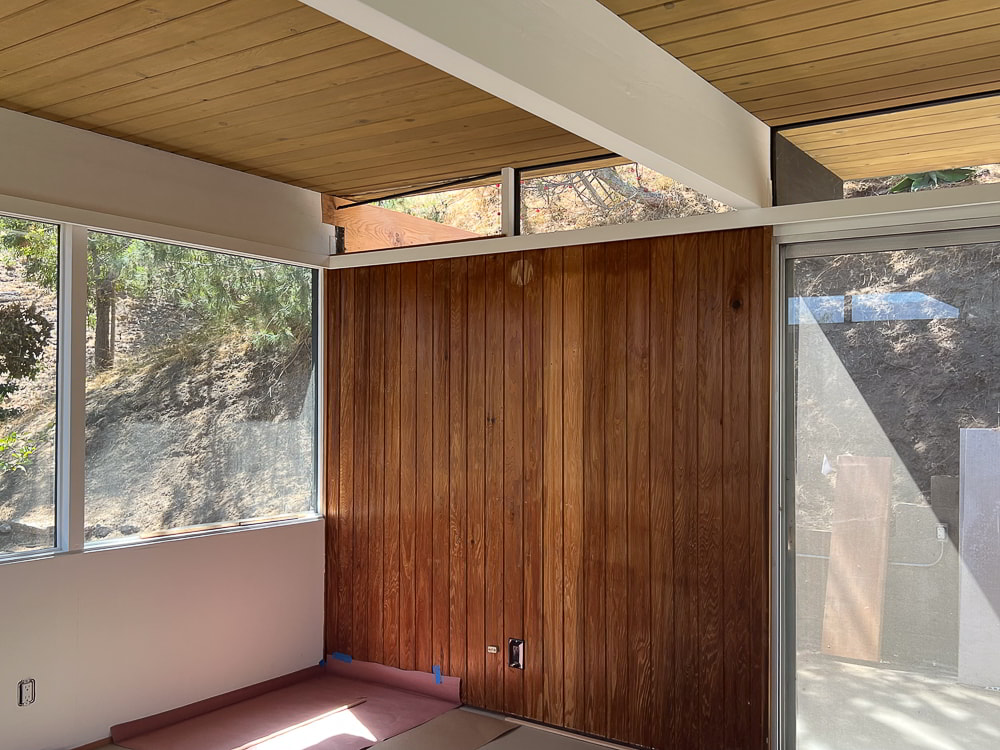
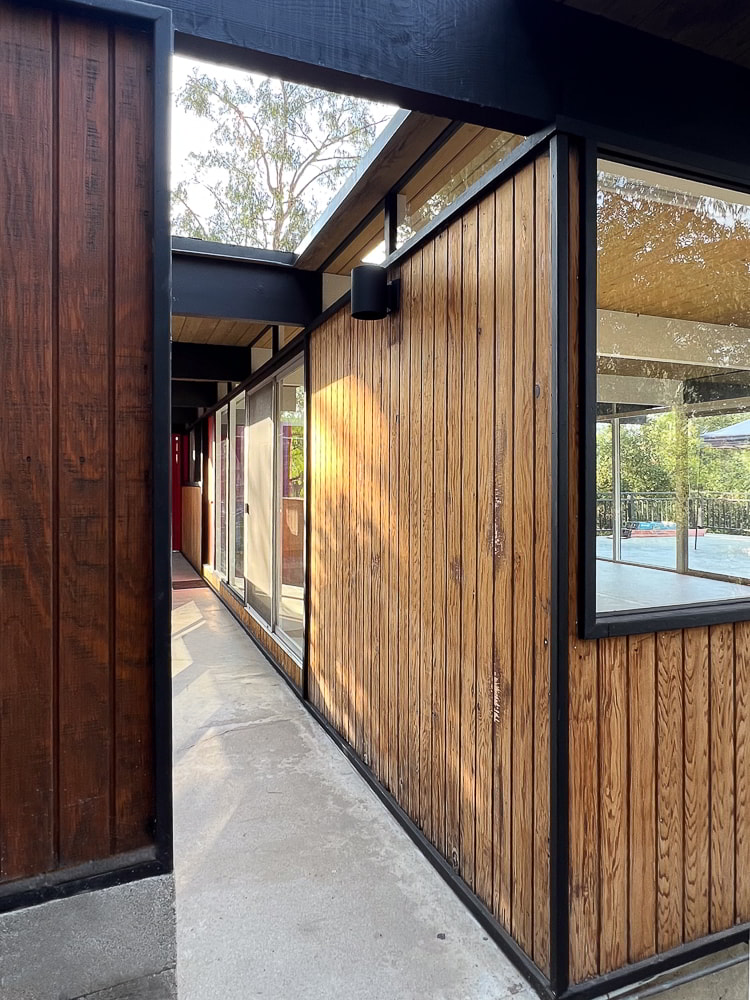
    Manufactured by the United States Plywood Corporation, Weldwood panels were a popular finish for mid-century commercial and residential interiors. The interior panels in this 1961 building appear to be Douglas Fir with a heavy wire-brushed texture, creating a deep wood grain relief that is difficult to replicate. These panels are no longer manufactured, following the dissolution of the United States Plywood Corp. Holes from the original wall sconces were carefully matched and plugged using offcuts found in the crawl space.Exterior panels, weathered with dark patches, were sanded and resealed with oil. Panels previously replaced with T1-11 siding were also sanded and stained to mimic the newly refinished Weldwood.
  • Stairs
    One stringer of the entry stairs was severely rotted and replaced in place. Several treads were repaired or rebuilt.

General Contractor: Los Carpenters
Read more

Oak Grove Renovation

2025

Originally designed and completed in 1961 by architect Dick Lowry, this post-and-beam residence is believed to be one of his earliest explorations in the Mid-Century Modern (MCM) style. Tucked into the north-facing hillside, the home enjoys two defining features: sweeping views of the Angeles Crest and Verdugo Mountains to the north, and dappled southern light filtered through mature trees.

In 2025, the home underwent a thoughtful renovation and restoration aimed at enhancing its original spirit while adapting it to contemporary living.

RENOVATION OVERVIEW:

The renovation focused on removing barriers to natural light and views, improving spatial flow, enhancing privacy, and upgrading kitchen functionality.

  • Skylight
    The interior-facing fritted glass cover, along with fluorescent tubes and fixtures, was removed from the old skylight to maximize daylight and restore a direct visual connection to the sky. This intervention is especially valuable during winter months, when the hillside and deep overhangs limit sunlight penetration.
  • New Operable Windows
    An upper cabinet was removed and replaced with operable windows, introducing cross-ventilation and opening up views to the backyard—bringing fresh air and a renewed sense of connection to the outdoors. Another operable window is added to work in tandem with the exhaust fan to quickly remove heat and cooking smoke.
  • Animated Screen
    A custom-designed screen, featuring a graphic interpretation of the sun’s path, was introduced to animate the interior and foster spatial interplay. It defines and subtly separates the foyer, living, and dining areas while maintaining visual and spatial continuity. The screen also restores a view corridor from the kitchen to the northern mountains and provides privacy for the living and dining zones from the main entry. This replaced a previously opaque privacy panel that had visually and functionally severed the kitchen and dining areas from the living room.
  • Kitchen Design
    The renovated kitchen features a vibrant palette and early to mid-century modern materials such as Corian and Formica to complement the existing exterior palette. Thoughtfully configured cabinetry provides generous storage for pantry staples and accommodates large and tall portable appliances. The sink is relocated to face the window for the enjoyment of the backyard as well as its connection with the new peninsula.
  • New Bench & Cladding around the Fireplace
    A “floating,” wraparound bench—replacing an old media cabinet that obstructed circulation—was added to connect the living and dining rooms, while also providing a perch behind the new screen. New brick tiles replaced the old flagstone cladding, updating the fireplace’s appearance and allowing greater clearance for adjacent passageways.
  • Cove Light
    LED cove lights were installed throughout the house, eliminating the need for interior wall sconces. Approximately 90% of the electrical wiring was also replaced.
  • Ground Floor Entry Area
    A new portico and entry pathway offer privacy and rain protection, replacing the previous circulation route beneath the open-riser stairs. The bench at the portico provides a dry area for package drop-off, as well as storage, loading/unloading space, and a sitting area serving the carport.

RESTORATION:

  • Beam End Replacement
    Unprotected beam ends are among the most vulnerable elements in mid-century modern structures. This 1961 post-and-beam building exhibited typical signs of deterioration: moisture damage, termite intrusion, and rot-induced twisting. Several cantilevered beam portions were replaced and spliced back into the primary structure.
  • Weldwood Plywood Panels
    Manufactured by the United States Plywood Corporation, Weldwood panels were a popular finish for mid-century commercial and residential interiors. The interior panels in this 1961 building appear to be Douglas Fir with a heavy wire-brushed texture, creating a deep wood grain relief that is difficult to replicate. These panels are no longer manufactured, following the dissolution of the United States Plywood Corp. Holes from the original wall sconces were carefully matched and plugged using offcuts found in the crawl space.Exterior panels, weathered with dark patches, were sanded and resealed with oil. Panels previously replaced with T1-11 siding were also sanded and stained to mimic the newly refinished Weldwood.
  • Stairs
    One stringer of the entry stairs was severely rotted and replaced in place. Several treads were repaired or rebuilt.

General Contractor: Los Carpenters
Read more